


Exhibiting living and dining furniture at CIFF puts your brand in front of buyers you simply cannot reach through other channels. The numbers tell the story: 380,000 professional visitors from over 200 countries walk these halls each edition. For manufacturers serious about international growth, this fair has become the proving ground where deals get made and partnerships form.
Getting Your Pre-Show Work Right
The weeks before CIFF determine much of what happens during it. Most exhibitors underestimate this phase, then wonder why their booth traffic disappoints.
Start with honest research into who actually attends. CIFF draws everyone from small boutique retailers to major chain buyers, and their needs differ dramatically. A European distributor looking for mid-century modern pieces has different concerns than an Asian hospitality buyer sourcing for hotel projects. Your messaging needs to acknowledge these differences.
Digital outreach works, but only when it feels specific rather than broadcast. Targeted social campaigns, email sequences, and online ads should highlight particular products or capabilities that matter to your identified segments. Generic “visit us at booth X” messages get ignored. Specific invitations to see a new collection or discuss a particular application get responses.
Book appointments before you arrive. Serious buyers plan their schedules weeks in advance. If you wait until the show floor opens to start conversations, you are competing for attention with thousands of other exhibitors. Early engagement secures the meetings that matter.
Building a Value Proposition That Actually Resonates
Every exhibitor claims quality and innovation. These words have lost meaning through overuse.
What makes your living and dining furniture genuinely different? Maybe it is a proprietary finishing process that extends product life. Perhaps your design team has solved a specific problem in modular dining systems. It could be your supply chain transparency or your ability to customize at scale without crushing lead times.
Whatever it is, state it plainly. International buyers hear hundreds of pitches during CIFF. The ones they remember are concrete and verifiable. “Our reclaimed wood dining tables use timber from certified demolition projects with full chain-of-custody documentation” lands harder than “we care about sustainability.”
Designing a Booth That Works
Your booth space functions as a compressed version of your brand. Every decision communicates something to visitors walking past.
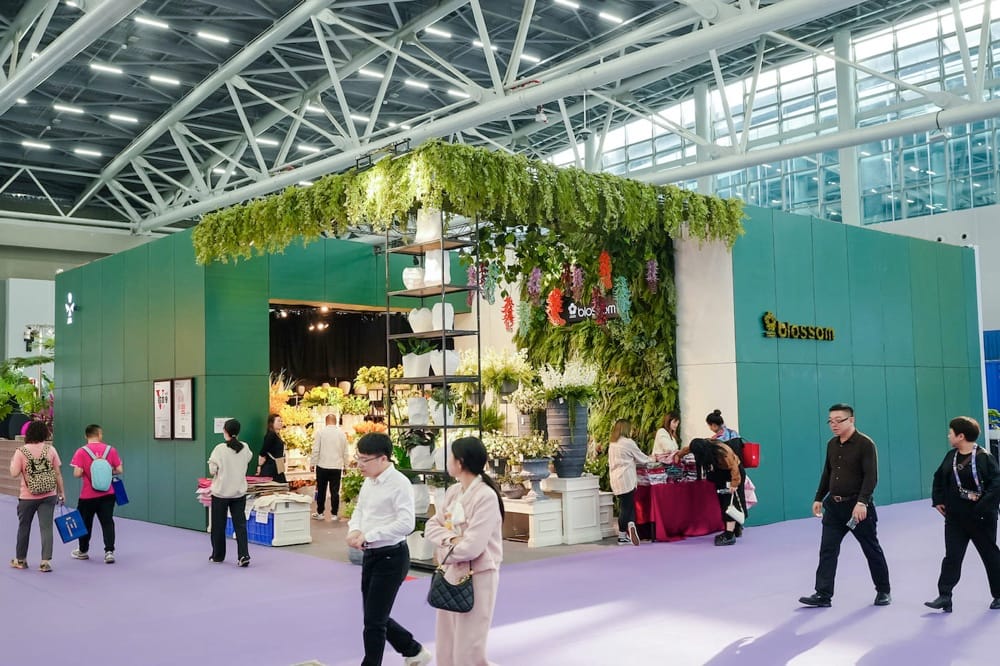
Layout matters more than most exhibitors realize. Traffic flow should feel natural, not forced. Visitors need clear sightlines to your hero pieces, but also comfortable spaces for longer conversations. The balance between open accessibility and private meeting areas requires thought.
Lighting transforms ordinary displays into compelling presentations. Living and dining furniture responds particularly well to layered lighting that mimics residential settings. Harsh overhead fluorescents flatten everything; strategic accent lighting creates depth and warmth.
Interactive elements earn their space when they add genuine value. A virtual tour of your manufacturing facility can build confidence in quality. Live demonstrations of furniture mechanisms or material durability give visitors something to remember. Gimmicks without substance waste floor space and visitor patience.
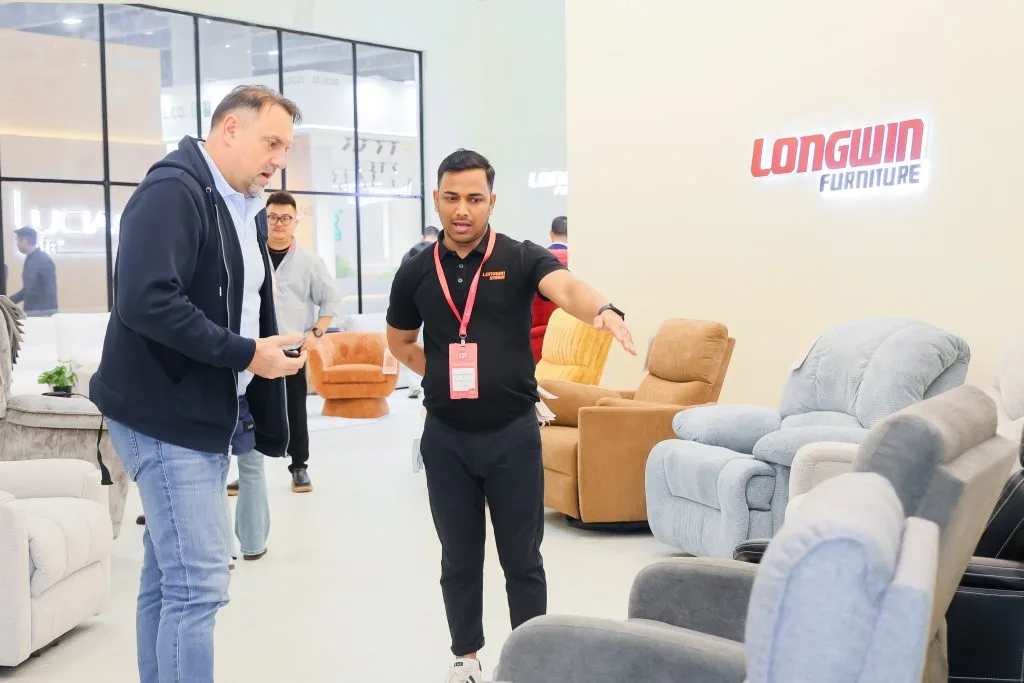
Staff preparation often gets neglected until the last moment. Your team needs product knowledge deep enough to answer technical questions, but also the interpersonal skills to read what each visitor actually wants. Multilingual capability matters at CIFF given the international attendance.
Presenting New Living Room Collections Effectively
New living room furniture collections deserve more than random placement across your booth.
Create distinct zones that tell coherent stories. A contemporary sectional collection might occupy one area with appropriate styling, while a transitional occasional table line gets its own vignette. This approach helps buyers visualize how pieces work together and imagine them in retail or project settings.
Professional staging makes an enormous difference. Complementary accessories, rugs, and lighting create aspirational environments rather than furniture showrooms. Buyers respond to lifestyle presentations because their customers do too.
Clear signage explaining design features, material choices, and functional benefits supports your sales conversations. Not every visitor will speak with your team directly; some prefer to browse and absorb information independently before engaging.
Consider offering scheduled tours or design consultations. These structured interactions allow deeper exploration of your collections and create memorable experiences that distinguish your booth from competitors.
Using CIFF’s Scale for Market Expansion
The sheer size of CIFF creates opportunities that smaller regional shows cannot match. Over 380,000 professional visitors from more than 200 countries and regions means exposure to markets you might never otherwise access.
Networking events and B2B matchmaking sessions deserve serious attention. These structured interactions connect you with potential distributors, retailers, and collaborators who have already expressed interest in your product categories. Random booth traffic has value, but curated introductions often yield better results.
CIFF positions itself around design trends, global trade, and full supply chain coverage. This positioning attracts visitors with specific commercial intent rather than casual curiosity. Exhibiting living and dining furniture here signals market seriousness to potential partners.
The fair also offers insight into supply chain optimization. Connections with component suppliers, logistics providers, and manufacturing partners can strengthen your operations beyond immediate sales opportunities.
Current Directions in Living and Dining Furniture
Understanding where the market is heading helps you position collections effectively at CIFF.
Sustainability has moved from marketing angle to baseline expectation for many buyers. Recycled materials, ethical sourcing, and low-VOC finishes now factor into purchasing decisions across most markets. This shift affects both material choices and how you communicate about them.
Smart furniture integration continues growing, though implementation varies widely. Some buyers want fully connected pieces with wireless charging and app control. Others prefer simpler approaches like modular components that adapt to changing needs. Knowing your target segments helps you emphasize the right capabilities.
Biophilic design influences remain strong. Natural materials, organic shapes, and designs that incorporate or complement indoor plants appeal to consumers seeking calming domestic environments.
Multi-functional pieces address practical realities of urban living. Convertible furniture, hidden storage solutions, and adaptable layouts solve real space constraints that many end consumers face.
Personalization expectations have risen. Customization options and artisanal craftsmanship create differentiation in markets saturated with mass-produced alternatives.
| Trend Category | Key Characteristics | Impact on Design |
|---|---|---|
| Sustainability | Recycled materials, ethical sourcing, low VOC finishes | Eco-conscious aesthetics, durable construction |
| Smart Furniture | Integrated tech, modular components, connectivity | Enhanced functionality, minimalist integration |
| Biophilic Design | Natural elements, organic shapes, indoor plants | Calming atmospheres, connection to nature |
| Multi-functional | Convertible pieces, hidden storage, adaptable layouts | Space optimization, urban living solutions |
| Personalization | Customization options, artisanal craftsmanship | Unique identity, bespoke experiences |
Why Dining Room Furniture Exhibitors Choose CIFF
Dining room furniture manufacturers gain specific advantages from CIFF participation beyond general exposure.
Direct access to international buyers, distributors, and interior designers actively seeking dining solutions creates immediate commercial opportunities. These visitors arrive with budgets and buying authority, not just curiosity.
Feedback on new collections comes quickly and honestly. Buyers will tell you what works for their markets and what does not. This intelligence has real value for product development and market positioning.
CIFF’s design trend focus means your dining room furniture appears alongside industry innovations. This context enhances brand perception and positions you as a serious market participant rather than a commodity supplier.
The full supply chain environment enables connections with suppliers and partners that can improve your production and distribution capabilities. These operational improvements compound over time.
Making Post-Show Follow-Up Count
What happens after CIFF closes often determines whether your participation was profitable.
Lead management needs to start immediately. Memories fade quickly, and buyers meet dozens of exhibitors. Prompt, personalized follow-up while your booth visit remains fresh makes a significant difference in conversion rates.
Categorize leads by potential and urgency. A major distributor expressing strong interest deserves different treatment than a small retailer who collected your catalog. Your follow-up resources are finite; allocate them strategically.
Personalized communication outperforms generic follow-up. Reference specific conversations, products discussed, or requirements mentioned. This attention to detail signals professionalism and genuine interest in partnership.
Track outcomes systematically. Sales conversions, partnership agreements, and media coverage all contribute to understanding your actual return on CIFF investment. This data informs decisions about future participation and resource allocation.
Connecting Digital and Physical Presence
Digital marketing extends your CIFF impact before, during, and after the fair.
Pre-show campaigns build awareness and drive booth appointments. Social media, email marketing, and targeted ads should promote your participation with specific reasons to visit. Share booth numbers, highlight featured products, and offer appointment scheduling.
During CIFF, real-time content keeps your broader audience engaged. Live streams, social updates, and event hashtags extend your reach beyond physical attendees. This content also creates assets for post-show use.
After the fair, content marketing leverages your CIFF experience. Blog posts, videos, and virtual tours showcasing highlights maintain momentum. Email nurturing campaigns keep collected leads engaged. Retargeting ads re-engage prospects who showed initial interest.
This integrated approach ensures your CIFF investment generates value beyond the exhibition dates themselves.
Frequently Asked Questions
How does CIFF support furniture brands in reaching international buyers?
CIFF provides direct access to over 380,000 professional visitors from more than 200 countries and regions. The fair offers dedicated services for export and trade promotion, including B2B matchmaking programs that connect exhibitors with qualified international buyers, distributors, and designers actively seeking new suppliers.
What makes CIFF different from other furniture trade shows for living and dining manufacturers?
CIFF covers the full supply chain, attracting a comprehensive range of industry professionals from designers to retailers to hospitality buyers. The strategic locations in Guangzhou and Shanghai, combined with the fair’s reputation built since 1998, ensure high-quality visitor traffic. The scale simply exceeds what regional shows can offer.
Can newer furniture brands use CIFF to understand market trends?
CIFF functions as a concentrated source of market intelligence. Dedicated trend zones, design forums, and direct conversations with global buyers provide insights into evolving demands and preferences. Newer brands can learn quickly what resonates across different markets and adjust their offerings accordingly.
Connect with CIFF
Put your living and dining furniture in front of the buyers who matter. china international furniture fair (CIFF) connects manufacturers with international buyers and industry leaders across 200 countries and regions. The upcoming Guangzhou and Shanghai editions offer exhibitor opportunities for brands ready to expand their global presence. Contact us at caoxw@cfte.com to discuss participation.