


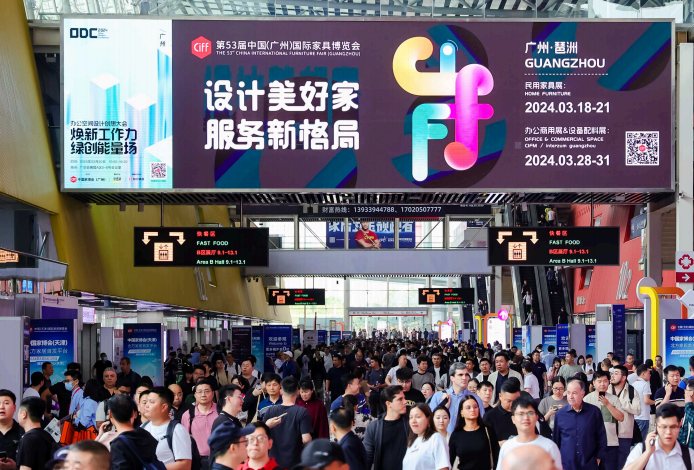
CIFF 2026 Guide: As a “supply chain hub” connecting over 2,500 high-quality manufacturers, the China International Furniture Fair (CIFF) attracts furniture traders from around the world to conduct bulk purchasing every year.
Combining the fair’s advantages of “finished products + materials” full-chain exhibition layout and the practical experience of previous buyers, this guide provides bulk buying tips to help you efficiently lock in high-quality supply sources and control cost risks.
Click the link below to pre-register now and participate in CIFF 2026 immediately, or scan the QR code to join.
https://xt.ciff-gz.com/3807/index.html?ly=57EH00021
I. CIFF 2026 Guide:Visit the Fair with Clear Needs
1. Prepare a Demand List
Based on your core business focus (e.g., cross-border wholesale, local retail), categorize products into “core categories + supplementary categories”.
For example, traders specializing in office furniture can focus on core categories such as steel furniture and solid wood tables/chairs, while simultaneously researching soft furnishing products.
Leverage CIFF’s “Full-Chain Exhibition Areas” to achieve “one-stop procurement”. Additionally, reserve a 10%-15% flexible margin in the order quantity to adapt to potential capacity constraints of suppliers discovered on-site at the fair.
2.Use Fair Tools to Lock in Target Manufacturers
Filter suppliers through the “Exhibitor Directory” on the CIFF official website, using filters like “production area + qualifications + production capacity”.
For instance, traders requiring cross-border supply can prioritize suppliers labeled with “complete export qualifications” and “EU/US certifications”.
Furthermore, you can pre-register on the official website and book meetings 3-5 days in advance through the fair’s “Manufacturer Matching Service”. Pre-register Now: https://www.cifffurniturefair.com/the-57th-china-international-furniture-fair-guangzhou/
Specify your “bulk purchasing intention” and estimated order quantity to allow suppliers to prepare quotations and sample plans in advance.
MATCHING CLICK 2 CONNECT
It allows exhibitors and buyers to discover potential partners based on specific needs, such as product categories, business scales, or market focuses, through intelligent matching algorithms.

Users can initiate conversations, share product catalogs, or schedule meetings virtually, breaking geographical and time barriers to lay the groundwork for in-depth cooperation.
MATCHING MEET 2 MATCH
CIFF “Meet 2 Match” refers to the IBC Matching service offered by the China International Furniture Fair (CIFF) to connect international buyers with exhibitors. It’s a precision matching project aimed at facilitating business connections during the CIFF Guangzhou event.
“Meet 2 Match” is part of CIFF’s broader initiative to enhance the experience for international buyers by offering targeted introductions and facilitating business opportunities.
The project utilizes a system to identify and connect buyers with exhibitors whose products and services align with their needs. This targeted approach helps streamline the sourcing process and maximize the value of attending the fair.
II. Efficiently Finalize Cooperation On-Site
1. Sample Inspection
For solid wood furniture, focus on checking the sturdiness of mortise-and-tenon joints and the wear resistance of paint films. For upholstered furniture, press the seat surface to test its rebound speed. For products intended for export, request third-party test reports from suppliers and carefully verify data related to hazardous substance limits.
Additionally, confirm whether the samples are “mass-produced models” and ask to view production line videos or schedule post-fair factory visits (CIFF organizing committee can assist in coordinating factory inspections).
2. Negotiation Skills
Leverage your annual purchase volume to negotiate better prices and strive for tiered pricing policies (e.g., an additional 3% discount for annual purchases exceeding 5,000 units).
Clearly specify production lead times and logistics responsibilities in the contract.
For example, stipulate: “Production shall be completed within 45 days; the supplier shall be responsible for delivering goods to the designated warehouse, and any damage rate exceeding 2% shall be replenished by the manufacturer.”
Moreover, for bulk purchases, agree on “warranty period + maintenance response time”. Especially for vulnerable parts such as hardware and fabrics, request suppliers to reserve spare parts to reduce long-term maintenance costs.
3. Leverage Fair Services to Enhance Procurement Value
After signing contracts in the finished products exhibition area, immediately visit the concurrent materials exhibition area to connect suppliers with high-quality auxiliary material manufacturers.
This approach helps suppliers reduce costs while enabling you to negotiate more favorable purchase prices for yourself.
III. Implementation Guarantee: Risk Control from Contract Signing to Fulfillment
The success of bulk purchasing lies in contract fulfillment.
On the day of signing: Collaborate with the supplier to create an “Order Confirmation Letter”, specifying key details such as product model, quantity, specifications, and price.
Mid-production stage: Request the supplier to send production progress videos every 15 days.
IV. CIFF 2026 Guide: Pitfall Avoidance Guide for Fair Procurement (Must-Read for Traders)
Reject “oral commitments”: All preferential policies and delivery terms must be clearly stated in a written contract.
By leveraging CIFF’s advantages of “resource aggregation + professional services”, bulk purchasing can transform from “time-consuming and labor-intensive screening” to “precise and efficient planning”.
From early demand planning to on-site contract negotiation and post-event fulfillment management, every step should focus on the core goals of “cost reduction, quality improvement, and efficiency enhancement”.
This way, you can build a stable and competitive supply chain system at the fair, just like successful buyers in previous years.