


The China International Furniture Fair has been running since 1998, and over that time it’s become one of those industry fixtures that actually delivers on its promise of connecting people who make furniture with people who sell it. CIFF operates as the world’s largest home furnishing fair, and what makes it work is the sheer concentration of decision-makers in one place. Manufacturers meet designers, suppliers find buyers, and deals that might take months of emails happen over coffee between booth visits.
Strategic Alliances That Actually Move the Industry Forward
The partnerships that come out of CIFF tend to have real staying power because they’re formed by people who’ve seen each other’s products firsthand. At recent CIFF Guangzhou editions, the conversation kept circling back to sustainable materials and modular designs. Not because sustainability is trendy, but because buyers are asking for it and manufacturers need to figure out how to deliver.
When a furniture maker partners with a designer at one of these events, the timeline from concept to production compresses significantly. Smart home integration is a good example. Furniture with built-in charging, automated adjustments, responsive lighting. These features require collaboration between people who understand electronics and people who understand how a sofa actually gets used. Those partnerships form at CIFF because both sides are there, walking the same aisles.
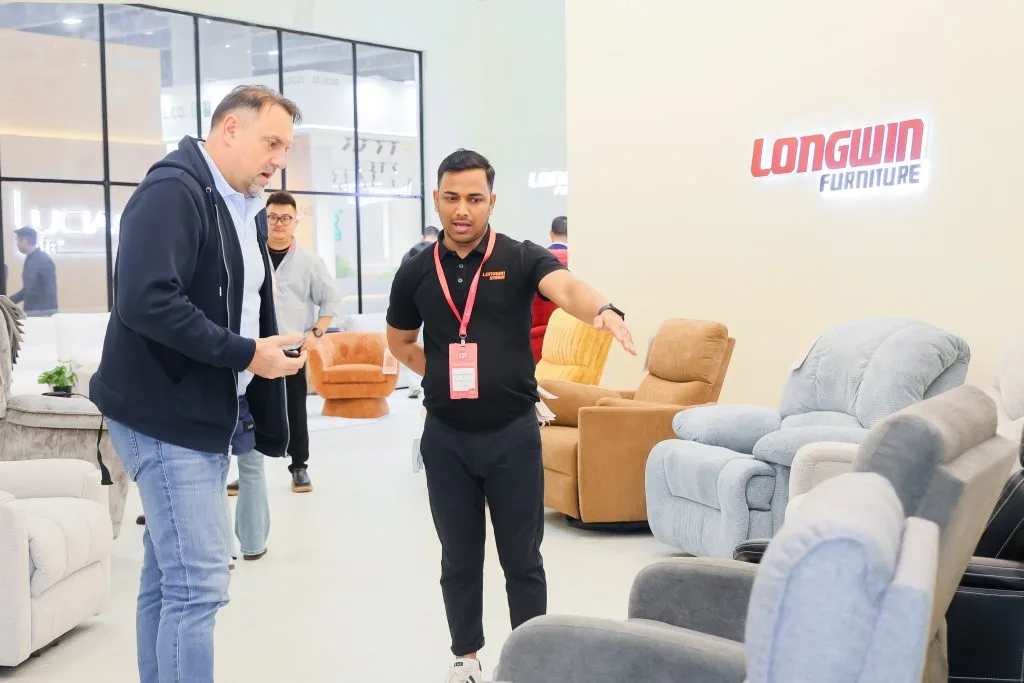
Where Global Trade Actually Happens
CIFF pulls professional visitors from over 200 countries and regions. That’s not a marketing number. Walk the halls during peak hours and you’ll hear a dozen languages before you reach the end of a single aisle. With more than 4,900 brands exhibiting, the fair functions as a compressed version of the global furniture market.
The launch of CIFF (Tianjin) added another dimension to this reach. Northern China represents a distinct market with its own preferences and distribution networks. Having a dedicated event there means businesses can access consumer bases that might otherwise require separate trade missions.
| Region | Visitor Demographics (Approx.) | Exhibitor Reach |
|---|---|---|
| Asia | 60% | 70% |
| Europe | 15% | 10% |
| Americas | 10% | 5% |
| Africa | 8% | 5% |
| Oceania | 7% | 10% |
For businesses looking to expand internationally, these numbers tell a story about where the opportunities concentrate. To dig deeper into making the most of your attendance, our breakdown on leveraging CIFF for global market expansion covers the practical steps. 《How can businesses leverage CIFF for global market expansion?》
How do partnerships at CIFF drive furniture industry growth?
The growth mechanism is straightforward. When companies pool resources for R&D, they can tackle problems that would be too expensive to solve alone. Intelligent manufacturing processes and sustainable material development both require significant investment. Partnerships spread that cost and accelerate the timeline. Beyond the technical side, these alliances open distribution channels. A manufacturer in Guangdong gains access to retail networks in Germany. A designer in Milan finds production capacity in Foshan. The industry grows because these connections multiply what any single company could accomplish.
Supply Chain Solutions Beyond the Finished Product
The furniture machinery and raw materials segment at CIFF Guangzhou doesn’t get the same attention as the showroom floors, but it’s where a lot of the practical business happens. This is where you find the companies making production faster, cheaper, or more sustainable.
Intelligent manufacturing systems on display here represent real operational improvements. Robotic assembly, precision cutting, automated quality control. The material sourcing side has evolved too. Suppliers now present recycled composites, bio-based alternatives, and engineered materials that perform better than their traditional counterparts. Partnerships formed in this segment affect everything downstream. Better materials and more efficient production translate to better margins and more competitive pricing.
What new technologies and designs were showcased at CIFF’s latest event?
Recent events featured robotic systems capable of handling complex assembly tasks that previously required skilled manual labor. Material innovation was prominent. Recycled plastics reformulated for structural applications, bio-based composites that match or exceed the durability of conventional materials. Smart furniture integration has matured beyond novelty. Embedded charging, responsive lighting, and automated comfort adjustments now appear across multiple product categories. Ergonomic design received significant attention, with manufacturers presenting furniture that adapts to different body types and use patterns.
Investment Follows Where the Industry Gathers
The furnishing sector faces the same pressures as every other manufacturing industry. Consumer preferences shift, material costs fluctuate, regulations tighten. Companies that want to remain competitive need to invest in adaptation, and they need partners who can help them do it.
CIFF’s positioning around design trends, global trade, and full supply chain coverage makes it a natural gathering point for these conversations. When investors want to understand where furniture is heading, they come here. When manufacturers need to find technology partners, they come here. The fair creates conditions where long-term strategic relationships can form because everyone with a stake in the industry’s future is present.

How can businesses leverage CIFF for global market expansion?
Start with targeted networking. The fair offers matchmaking services that can connect you with specific types of buyers or partners. Use them. Before you arrive, identify which exhibitors align with your expansion goals and prioritize those visits. The real work happens after the fair ends. Follow-up determines whether a business card becomes a contract. Have a system for tracking contacts and a timeline for reaching out. The companies that treat CIFF as the beginning of a relationship rather than a one-time event are the ones that see actual market expansion.
Three Cities, Three Distinct Opportunities
CIFF operates across Guangzhou, Shanghai, and now Tianjin. Each location serves a different purpose in the broader strategy.
CIFF Guangzhou runs every March and remains the flagship event. The focus spans design trends, intelligent manufacturing, trade promotion, and quality consumption. It’s the most comprehensive of the three. CIFF Shanghai in September offers a complementary market perspective, drawing a different mix of visitors and exhibitors. CIFF (Tianjin) launched in May 2024 to address northern Chinese markets specifically. The expansion reflects how the furniture industry’s geography has shifted and how CIFF has adapted to remain relevant across different regional dynamics.
Frequently Asked Questions About CIFF Partnerships and Opportunities
What types of new partnerships are typically formed at CIFF events?
The range is broad. Manufacturers connect with designers to develop new product lines. Material suppliers find furniture producers looking for specific performance characteristics. Technology companies partner with furniture brands to integrate smart features. International distributors meet local retailers to establish import relationships. The common thread is that these partnerships address specific business needs. They form because both parties see a clear path to mutual benefit.
How does CIFF facilitate opportunities for small and medium-sized enterprises in the furniture industry?
SMEs benefit from access they couldn’t create on their own. The fair provides a global platform where a small manufacturer can present products to international buyers who would never otherwise encounter them. Dedicated zones and matchmaking services help smaller companies find relevant connections without getting lost in the scale of the event. Exposure to manufacturing technologies and market trends gives SMEs information they can use to compete more effectively. The playing field isn’t perfectly level, but CIFF makes it more accessible.
Beyond networking, what tangible benefits do exhibitors gain from new partnerships discovered at CIFF?
The tangible outcomes include new distribution channels that expand market reach, joint ventures that share development costs, and preferential sourcing arrangements that improve margins. Exhibitors also gain market intelligence. Seeing what competitors present, understanding what buyers are asking for, and identifying emerging trends all inform business decisions. The partnerships themselves often lead to increased sales and stronger competitive positioning, but the knowledge gained has independent value.
Shape the Future of Furnishing with CIFF
The china international furniture fair brings together the people and companies that determine where this industry goes next. Whether you’re looking to find new partners, enter new markets, or understand what’s coming, the opportunity is here. For exhibitor inquiries or visitor registration, reach out to caoxw@cfte.com or visit the official website to plan your participation at ciff guangzhou, Shanghai, or Tianjin.