


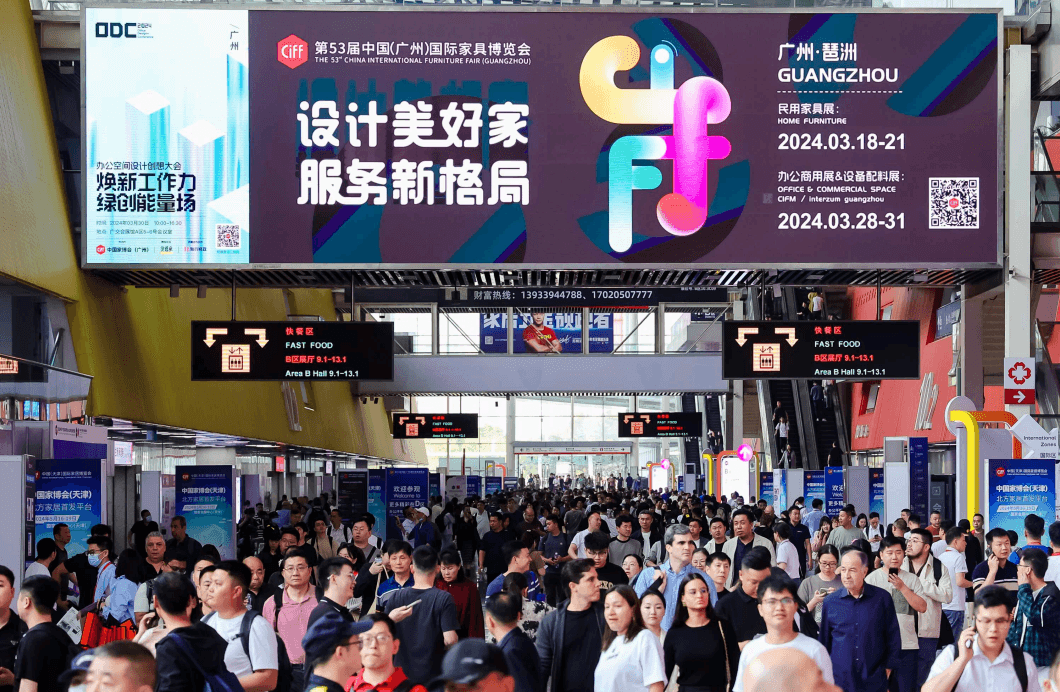
For multinational procurement groups, centralized sourcing at the China International Furniture Fair (CIFF) provides an excellent opportunity to optimize the supply chain. Furthermore, CIFF serves as a major platform for companies to showcase their brand.
However, even large multinational furniture groups often face complex challenges: How to meet the differing furniture product standards of multiple regional markets? How to better centralize negotiations to achieve economies of scale?
This guide is specifically designed for multinational procurement groups attending CIFF 2026, aiming to provide a systematic and highly efficient set of sourcing strategies.
I. Multinational Purchasing Groups at CIFF 2026: Pre-Show Planning: Strategic Goal Setting
Unlike other types of businesses, the procurement of multinational furniture groups requires a higher degree of coordination and precise planning.
1. Integration and Decomposition of Procurement Needs
Compared to small and medium-sized enterprises, large furniture groups often possess a significant procurement advantage—namely, the massive purchase volume, which prompts manufacturers to offer more favorable pricing.
Before the exhibition, the group can leverage its scale advantage in exchange for greater price concessions. For example, by consolidating the total annual procurement needs of all regional branches, the group can secure the most preferential payment terms.
Furthermore, you can decompose the company’s procurement needs into three tiers: Tier A (Core best-selling items, requiring high volume, high stability), Tier B (Regionally customized products, requiring high manufacturing flexibility), and Tier C (Testing products, requiring low-volume trial orders). Establish different supplier screening criteria for each tier, which will also serve as a crucial reference point for price negotiations.
2. Pre-Arrangement of High-Level Meetings
Given the time constraints of the exhibition, you should prioritize contacting the organizers to schedule in-depth meetings with suppliers’ senior management.
Relatively speaking, high-level meetings are more conducive to finalizing annual contracts, exclusivity clauses, and price protection agreements.
Click the link below to pre-register now and participate in CIFF 2026 immediately, or scan the QR code to join.
https://xt.ciff-gz.com/3807/index.html?ly=57EH00021
II. Exhibition Execution: Supply Chain Auditing and Risk Screening
The procurement team must verify that suppliers possess the mandatory certifications for the target market, such as the CE Mark for the European market or CARB/TSCA (for formaldehyde emissions) for the US market.
2. Supplier Tiering and Capability Assessment:
Evaluate whether the factory has the capacity for mass production to handle peak sales seasons. Does the factory possess the flexibility to adjust its production lines in response to market fluctuations?
Procurement groups should consider sending a cross-functional team composed of procurement, quality control (QC), and research & development (R&D) specialists. For bulk purchasing, inviting experts from different fields to conduct on-site evaluations leads to more informed and scientific decision-making.
III. Multinational Purchasing Groups at CIFF 2026: Optimization of Logistics and Financial Risk Management
Multinational Purchasing Groups at CIFF 2026: Consider leveraging the procurement group’s enormous freight volume to establish strategic partnerships with a few large freight forwarders to obtain more favorable shipping rates.
Additionally, coordinate cooperation between suppliers and freight forwarders to provide optimized door-to-door logistics solutions, minimizing the group’s involvement in customs clearance processes across various countries.
Flexibly utilize Letters of Credit (L/C) (offering the highest security) or Trade Factoring based on the supplier’s credibility and the region’s risk profile, thereby optimizing the group’s Cash Flow and risk exposure.