


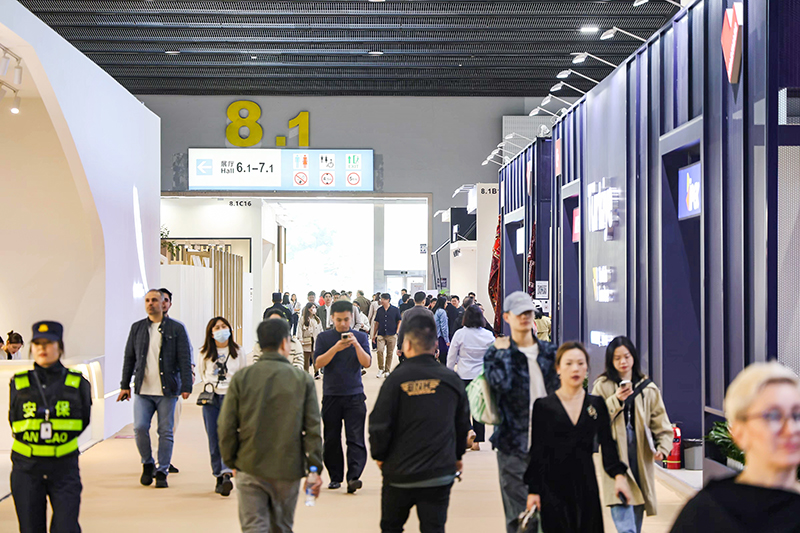
The pace of the furniture trade environment in 2026 is accelerating daily.
Data indicates that prior to 2020, the average time from product concept to market launch was 120–180 days. Today, leveraging the integration of the CIFF exhibition and Click2Connect digital tools, this cycle has been shortened to 45–60 days. This means you must navigate fierce competition with shorter production cycles; in this landscape, time is a resource even scarcer than capital.
To avoid wasting time on unqualified suppliers, it is highly recommended that buyers screen and filter manufacturers before diving into procurement details.
How can you avoid wasting time on unqualified furniture suppliers? Based on my 10 years of industry experience, here are the four stages professional buyers use to bypass inefficient suppliers:
Stage 1: Initial Screening via Online Trade Matching Platforms
Before attending the exhibition, I personally recommend conducting a preliminary investigation through the Click2Connect digital platform. Comparing multiple manufacturers horizontally to narrow down your choices is far more effective than searching blindly once you arrive on-site.
- Compliance Red Lines: If your target market has strict compliance requirements, start here. Inquire directly with manufacturers holding BIFMA (Office), CAL 117 (Flame Retardant), or EN 1335 (European Standard) certifications. Those who can instantly provide digital copies of these certificates should be placed on your priority list.
- Mature Industrial Clusters: Among the screened manufacturers, prioritize those from mature regions like Guangzhou and Shunde. Each region offers distinct product advantages, as shown in the table below:
China’s Core Furniture Production Hubs and Advantages
| Core Origin | Advantageous Categories | Core Competitiveness |
| Foshan (Shunde/Longjiang), Guangdong | All categories, Office, Upholstery | Global Hub: 1-hour supporting ecosystem, fastest design iteration, highest digitization. |
| Dongguan/Huizhou, Guangdong | High-end Bedroom/Dining sets, Modern Solid Wood | High Export Standards: Long-term service to Euro-American markets; manufacturing aligns with BIFMA. |
| Anji, Zhejiang | Office Chairs, Swivel Chairs, Gaming Chairs | Home of Swivel Chairs: Produces 1/3 of the world’s swivel chairs; extreme standardization and scale. |
| Luoyang (Pangcun), Henan | Steel Office Furniture, Safes | Cost Leader: World’s largest steel base; high cost-effectiveness for bulk projects. |
| Chengdu (Chongzhou/Wuhou), Sichuan | Panel Furniture, Upholstered Sofas | Domestic Leader: Excels in large-scale assembly line production for the mass market. |
| Xianghe, Hebei | Solid Wood Furniture, Northern Style | Northern Center: Backed by Jing-Jin-Ji region; steady product styles; radiates to North Asia. |
| Liqu (Suzhou), Jiangsu | Neo-Chinese, Bedroom/Dining sets | Diverse Styles: East China’s distribution center; ideal for specific design aesthetics. |
Stage 2: Implementing Online Pre-Audits for Manufacturers
Before confirming your travel plans, you can fully utilize a one-hour video conference to communicate with manufacturers in advance.
- Live Walkthrough: Don’t just watch polished promotional videos. Communicate with the contact person and ask them to walk directly into the workshop with their phone.
- Core Team Interview: Speak with the account managers and engineers you will deal with directly. This is where you can ask about core data. Test their English communication skills and reaction speed to technical details. Quick responses in these areas often indicate stronger corporate capability.
- Third-Party Reports: Manufacturers who can provide SGS or TUV factory audit reports from the past year are far more persuasive.
Stage 3: Red Flags of Unqualified Furniture Suppliers
If the following signs appear during communication, it is recommended to terminate the cooperation immediately:
- Over-Promising: Saying “no problem” to every customization request or extremely short lead time without providing a concrete implementation plan.
- Confusing Pricing Logic: Inability to clearly explain cost structures, or offering prices significantly lower than the market average.
- Abnormal Prototyping Cycles: Requiring more than 4 weeks for a simple color change indicates very weak supply chain integration.
Stage 4: Comparison Tool (Decision Logic)
| Dimension | Potential Partner | Time Waster |
| Communication Feedback | Provides professional advice; may even point out design flaws. | Only nods blindly; frequent errors occur later. |
| Transparency | Willing to show production progress via digital tools. | Replies are always “in progress” or “almost done” with no data. |
| Prototype Performance | High-quality details; includes self-inspection reports. | Sample has flaws with the excuse that “bulk will be better.” |
| Certification Support | Certificates are complete and valid. | Only expired certificates or borrowed ones. |
Conclusion
Successful and efficient furniture procurement is a combination of pre-show digital matching (Click2Connect), online video pre-audits, and alignment on core metrics.
I strongly advise buyers to use digital tools like Click2Connect before the CIFF exhibition to filter out 80% of mismatched suppliers, allowing you to focus your energy on true strategic partners.