


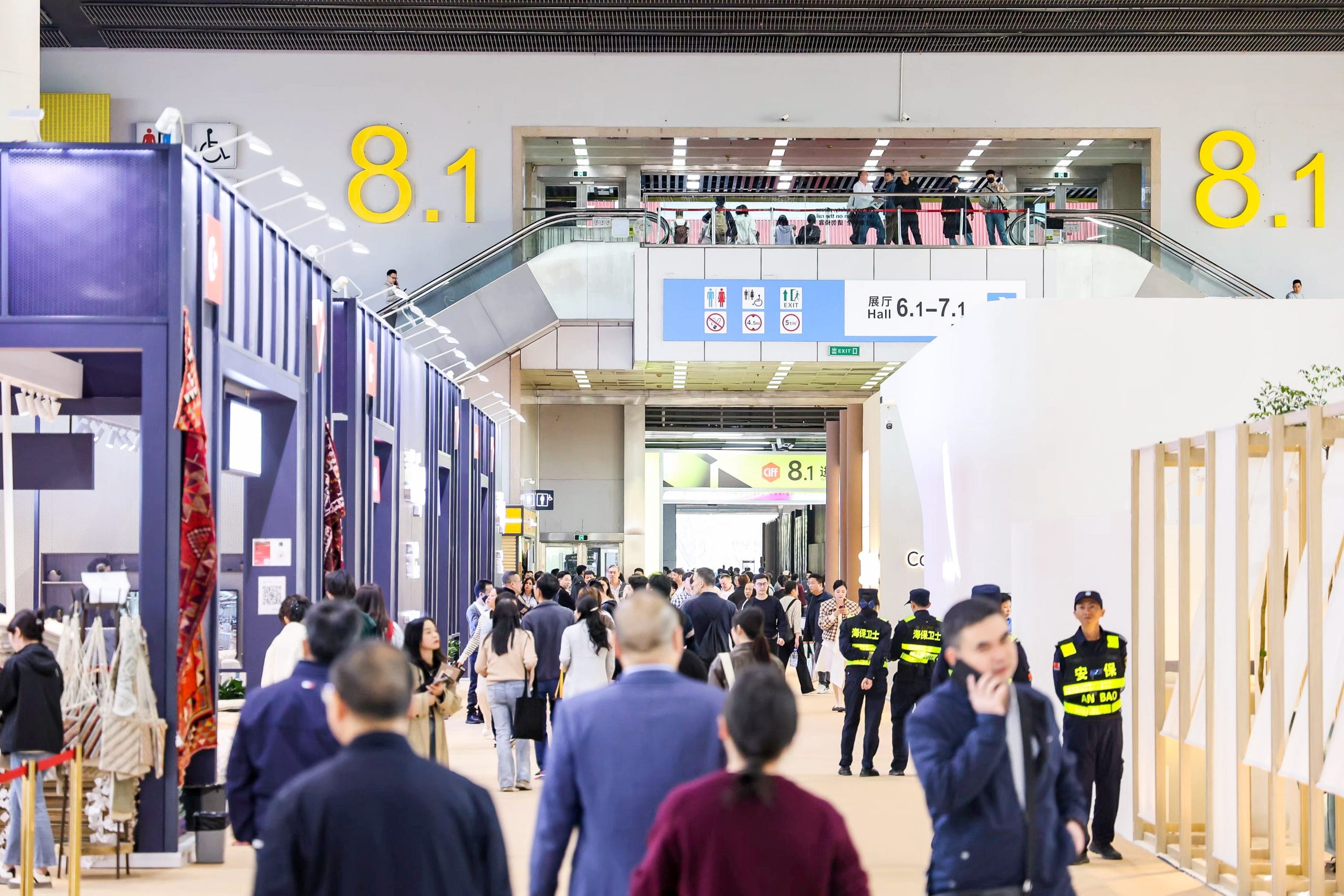
Guangzhou’s reputation as China’s furniture heartland stems from its prime geographic location and unparalleled industrial ecosystem positioning.
What solidifies its status as the nation’s furniture core is the seamless integration of exhibition foot traffic, corporate headquarters clusters, coordinated supply chains and cross-border trade.
1. Host to the World’s Largest Furniture Trade Fair Complex
Guangzhou is home to two flagship global furniture expos, cementing its standing as an international furniture trading epicenter. Headlining these events is CIFF Guangzhou (China International Furniture Fair), held every March. It ranks as the world’s largest all-in-one exposition for residential furniture, commercial office furniture, production machinery and raw materials, featuring high-caliber exhibitors across the board.
Key Statistics for the 57th CIFF Guangzhou (March 2026)
- Spanning 850,000 sq.m. across two interconnected phases, the show gathers over 5,100 global brands covering five core segments: residential furniture, office & commercial fit-outs, hotel OS&E, woodworking machinery and raw auxiliary materials.
- It drew a total of 353,000 professional attendees, including 64,291 overseas buyers from 185 countries and regions. International visitor numbers rose 13.2% year-on-year — 8 to 10 times the combined overseas attendance of Southeast Asian fairs MIFF, VIFA and IFEX.
- Complementing the main exhibition are a 170,000 sq.m. CIFM/interzum Guangzhou Machinery & Materials Fair and a 240,000 sq.m. Asia-leading office & commercial furniture zone. It is the world’s sole furniture expo integrating upstream smart manufacturing equipment, raw materials, finished goods and full commercial project solutions under one roof.
- Industry benchmark comparison: Combined floor space of domestic furniture fairs in Shanghai, Dongguan and Chengdu totals less than 400,000 sq.m., while Southeast Asia’s largest fair MIFF occupies only 100,000 sq.m. Neither boasts a complete upstream supply chain exhibition zone.
This landmark expo carries immense global pulling power, drawing tens of thousands of international buyers and furniture designers to Guangzhou each year.
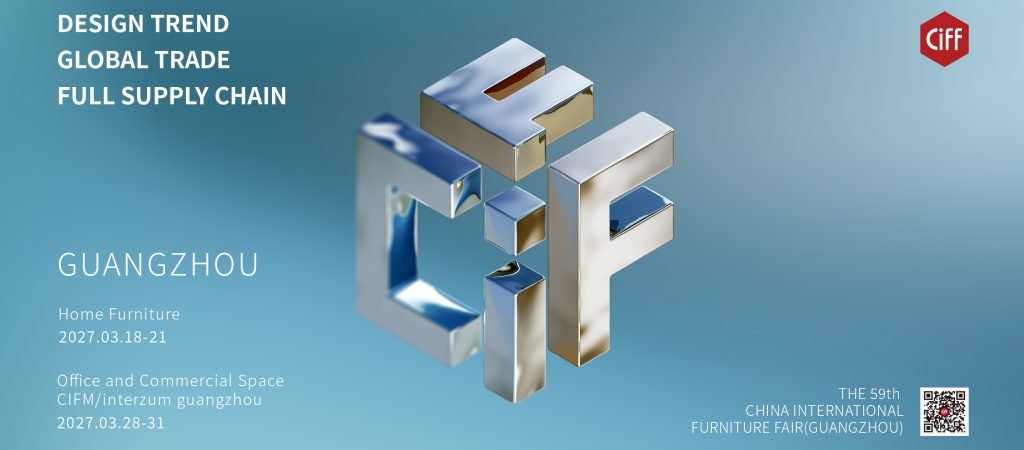
REGISTER NOW For FREE! :https://www.cifffurniturefair.com/the-57th-china-international-furniture-fair-guangzhou/
2. Anchor of the Pearl River Delta’s Mega Furniture Industrial Cluster
Geographically, Foshan specializes in furniture manufacturing, hosting world-renowned production and distribution hubs in Shunde’s Longjiang and Lecong districts. Neighbouring Guangzhou meanwhile functions as a premium commercial gateway and headquarters base, anchored by the Canton Fair and dedicated hotel OS&E trading markets.
Official industry data shows the annual output value of furniture manufacturing within the Guangdong-Hong Kong-Macao Greater Bay Area exceeds 1.2 trillion RMB, accounting for 40% of China’s national furniture production value. Above-scale furniture enterprises in Guangdong generated operating revenue of 184.4 billion RMB, making up 30.1% of the national total, with furniture export volume hitting 117.4 billion RMB.
Guangzhou’s one-hour economic circle encloses three world-class manufacturing bases: Longjiang and Lecong in Shunde (Foshan), and Houjie (Dongguan). Longjiang hosts more than 2,300 furniture manufacturers and 7,000 raw material suppliers. Lecong features 180 large furniture malls with an annual transaction volume of 800 billion RMB, home to nearly 1,000 permanently stationed overseas procurement representatives.
This geographically concentrated industrial collaboration creates a uniquely efficient closed-loop model: Guangzhou handles design and order intake, while Foshan manages production and shipment.
3. Ultra-Resilient, Fully Integrated Industrial Supply Chain
Within a 100-kilometer radius of Guangzhou lies the most complete upstream and downstream support network for furniture production anywhere in the country:
- Raw materials & production equipment: Material trading centers in Longjiang (Shunde) supply full-spectrum core accessories including leather, foam and upholstery fabrics; Lunjiao (Shunde) stands as a top-tier manufacturing base for high-precision woodworking machinery.
- Cross-industry collaboration: Zhongshan provides complete lighting supply chains, while Dongguan delivers a full range of precision metal hardware and plastic components.
Such tightly integrated industrial synergy slashes product development timelines. A brand-new furniture design can move from initial blueprints to finished prototypes within just a few days across the Pearl River Delta.
4. Mature International Logistics & End-to-End Export Service Ecosystem
As bulky, oversized cargo, furniture imposes strict demands on affordable, efficient transport infrastructure — a strength Guangzhou fully delivers on.
The city operates two major deep-water container ports: Nansha Port and Huangpu Port, with unobstructed access to Yantian Port in Shenzhen, forming an extensive global shipping network. In 2025, Guangzhou Port handled over 23 million TEUs, ranking among the world’s top 10 container ports. Nansha Port is the only 160,000-ton deep-water terminal on the western Pearl River Delta, offering direct shipping routes to more than 120 nations with the densest furniture export sailings nationwide.
Decades of export trade have nurtured China’s most sophisticated service ecosystem dedicated to oversized furniture shipments, covering specialized freight forwarding, customs clearance and cross-border settlement to deliver full turnkey logistics solutions for global buyers.
Additional cost and fiscal advantages include:
- Trucking fees for a single 40HQ container shipped from Foshan or Zhongshan factories via Nansha Port are 1,000–1,200 RMB lower than delivery to Shenzhen Yantian Port.
- Well-established port-of-departure tax rebate policies shorten furniture export tax refund processing time by 7 to 10 days, easing capital pressure for manufacturers.