


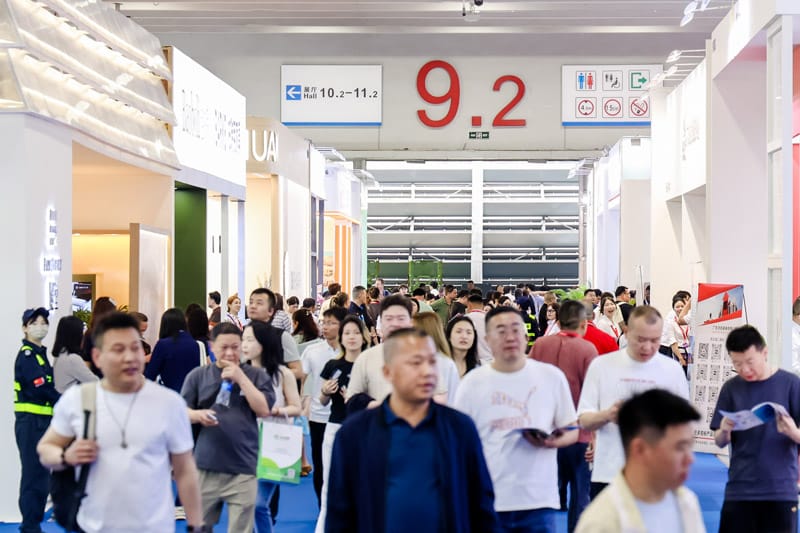
At the 2027 China International Furniture Fair (CIFF), thousands of suppliers will be on display. While this brings abundant options, it also makes it challenging to pinpoint high-quality furniture manufacturers that fit your requirements.
Relying solely on booth decor and size can be misleading. Though a large, professionally staffed booth generally reflects a company’s overall capacity, it does not guarantee a good fit. A manufacturer with a high minimum order quantity (MOQ) may not serve your business if you require agile market response and low order minimums.
I once attended CIFF alongside company leadership to source a hotel furniture contract manufacturer capable of consistent supply and spare-part after-sales support. Without a structured evaluation scorecard, we spent two full days just finding a marginally suitable vendor — an extremely inefficient process. From this experience, we learned a key lesson: always use a supplier evaluation scorecard to screen furniture manufacturers at trade shows.
REGISTER NOW For FREE! :https://www.cifffurniturefair.com/the-57th-china-international-furniture-fair-guangzhou/
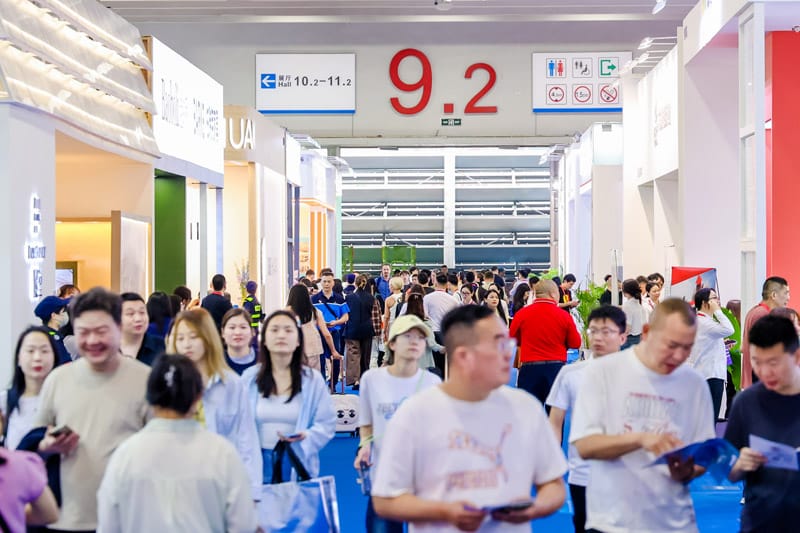
To help your furniture procurement team quickly shortlist genuinely viable suppliers after the fair, use the CIFF Supplier Evaluation Scorecard outlined below.
This scoring framework centers procurement assessment around six core criteria. Each category is scored out of 5 points, for a maximum total of 30 points, enabling quantitative side-by-side comparison between exhibitors.
| Dimension | Key Questions | Weight | Score (1–5) |
|---|---|---|---|
| 1. Product Fit | Does this product line closely align with your target market, sales channels and price positioning? | 20% | [ ] |
| 2. Minimum Order Quantity (MOQ) | How is MOQ calculated? Is it defined per item, colour, fabric or total order? Is the MOQ flexible? | 15% | [ ] |
| 3. Reorder Consistency | For future replenishment orders, can pre-approved fabrics, hardware and finishes be reliably reproduced? | 15% | [ ] |
| 4. Packaging & Specifications | Can the supplier provide clear carton dimensions, quantity per carton, CBM and robust product protection solutions? | 15% | [ ] |
| 5. Quality Evidence | Can the supplier present approved samples, first production pieces and relevant quality inspection records? | 20% | [ ] |
| 6. Private Label & Customisation Support | Can they fully accommodate custom finishes, branded labels, user manuals, SKU coding and bespoke packaging requirements? | 15% | [ ] |
How to Use This Scorecard During & After CIFF
The scorecard above serves as a template and may be refined further to match your specific product category. Here is how to deploy it:
Booth Impression: Never base partnership decisions on booth aesthetics alone. Booth scale should only be treated as a preliminary reference; prioritise collecting quantifiable data.
Score Segmentation: During your evening debrief after each show day, cross-reference collected quotations and business cards to tier suppliers:
- High Priority: Total score ≥24
- Medium Priority: 18–23
- Backup Candidates: <18
Next Steps: Reach out to high-priority suppliers via email within 3 working days of the fair, attaching detailed procurement requirements mapped against this scoring framework, to schedule factory visits and sample development.
Q&A
Q1: With limited time on-site, do I need to complete the full six-category scorecard for every supplier?
A: No. For initial booth visits, use quick notations only. Fill out the complete scorecard only for vendors with promising preliminary fit. Directly mark out suppliers with obvious mismatches, such as prohibitive MOQs or misaligned product styles, to save time. CIFF’s official guidance also recommends pre-selecting manufacturers through the Click2Connect platform before the exhibition to reduce unproductive on-site conversations.
Q2: Can I place an order directly once a supplier meets the score threshold?
A: No. This scorecard is merely an initial screening tool for the show floor and only indicates preliminary suitability. High-scoring suppliers still require follow-up steps: sample validation, on-site factory audits, verification of quality certificates and commercial contract negotiations. A high score is simply the entry ticket for the next review phase.
Q3: What red flags warrant caution even for high-scoring suppliers?
A: Common warning signs:
- Overpromising: Committing to short lead times and unlimited customisation without actionable implementation plans
- Unclear pricing structure: Offers far below market rates, unable to break down material and labour costs
- Failure to produce market-specific certifications (BIFMA, CAL 117, FSC, EUDR documentation etc.)
- Refusal to share live factory photos or workshop footage, suggesting they may be a trading company rather than an in-house manufacturer
Q4: What extra evaluation items should be added for export furniture procurement?
A: Two optional add-on check items (not counted in the original 30 points) are recommended for export buyers:
- Compliance documentation capability: timber traceability, carbon-related records and product compliance certificates
- Product compliance test reports: flame retardancy, formaldehyde emission, Martindale abrasion testing and more With EUDR enforcement underway, timber traceability and Digital Product Passports (DPP) have become critical review items for overseas buyers.
Q5: How to distinguish between factory owners and pure trading companies among exhibitors?
A: Ask these questions on the spot:
- Can you share live photos taken in your production workshop today?
- Are sampling and mass production completed in your own facility?
- May I review your business licence to confirm manufacturing is listed within your business scope? Trading companies usually cannot provide immediate production-site evidence and tend to be less reliable on delivery stability and reorder flexibility compared with direct manufacturers.
Authoritative References & Source Links
CIFF Guangzhou Official Buyer Guide: Pre-show Supplier Screening, On-site Vendor Evaluation & Post-fair Follow-up CIFF Official Article: How to Avoid Unqualified Furniture Suppliers – On-site Checks & Compliance Red Lines CIFF Official Article: Converting Booth Discussions into Firm Orders After CIFF – Supplier Tiering Strategies Academic Paper from Nanjing Forestry University: An Empirical Study on Green Furniture Manufacturer Supplier Selection Based on AHP‑TOPSIS — theoretical foundation for multi-criteria quantitative supplier evaluation BIFMA Office Furniture Standards – authoritative North American benchmark for furniture performance and safety
Legal Disclaimer
The CIFF supplier evaluation scorecard, screening methodology and scoring model provided herein serve solely as commercial reference tools for trade-fair procurement. They do not constitute legal advice, procurement guarantees or warranties of product quality. This scoring system is a qualitative plus semi-quantitative rapid on-site assessment instrument. Its results are only used for preliminary exhibitor screening and cannot replace on-site factory audits, third-party product testing, due diligence or contractual obligations.
Procurement requirements vary widely across categories (residential, hotel contract, office furniture; domestic versus export sales). Users must adjust weighting factors and evaluation criteria according to their target markets, order volumes and applicable regulatory requirements.
A supplier’s actual performance, product quality, lead times and after-sales service are subject to multiple external variables including raw material volatility, production scheduling and regulatory changes. A high score on this scorecard does not eliminate future performance risks.
The author accepts no liability for procurement losses or commercial disputes arising directly or indirectly from use of this evaluation tool.
External website links and industry materials cited are for reference only. Third-party websites maintain their own content, and this document does not endorse the veracity of information hosted on external platforms.