



Despite the globalization of economic trade, Europe and China represent two distinct industrial ecosystems in the furniture sector.
Countries like Italy, Germany, and Poland possess a profound heritage in high-end design. Their trend-leading aesthetics are highly favored by luxury consumers, allowing them to command significant brand premiums. However, to meet the demands of broader consumer markets, European and American buyers in 2026 continue to flock to the China International Furniture Fair (CIFF) for procurement.
Europe Furniture Markets vs China: Why Buyers Source at CIFF? The following are the primary reasons why global buyers choose CIFF when comparing the European and Chinese markets:
1. CIFF Guangzhou – A More Comprehensive and Cost-Effective Industry Chain
The Salone del Mobile in Milan enjoys immense global prestige, serving as the launchpad for top-tier luxury furniture brands. However, it leans more towards design-driven exhibitions and finished products. In contrast, CIFF is an ultra-large platform encompassing the entire furniture industry chain—offering not only cutting-edge design but also manufacturing technology, machinery, and a full range of home solutions.
The European model excels in the aesthetic leadership of specific categories, representing a fusion of quality living and art. However, supporting raw materials and mechanical equipment are often scattered across different exhibitions, and the region does not hold a relative advantage in furniture mass-manufacturing.
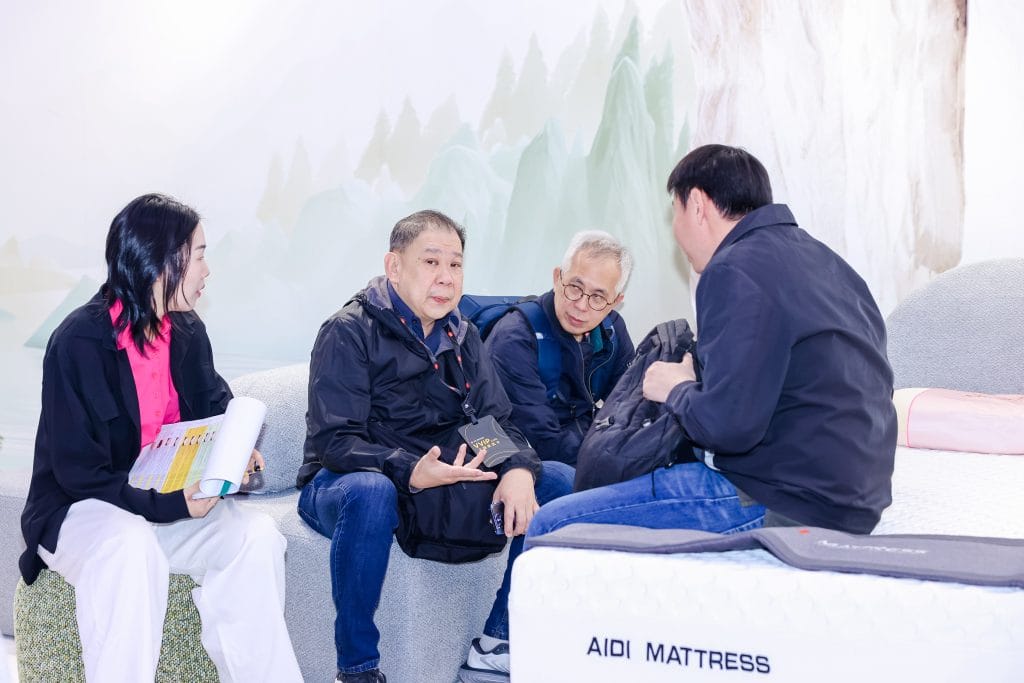
The CIFF model implements full industry chain synergy. Here, you can find OEM manufacturers, ODM suppliers, hardware accessories, and raw material providers all in one place. Furthermore, you can travel directly to furniture companies in Guangzhou and Foshan for on-site inspections.
Attending CIFF Guangzhou 2026 truly enables “one-stop” furniture procurement, significantly reducing cross-border travel and communication costs for buyers.
2. Formidable Furniture Customization Capabilities
The furniture market environment in 2026 is shifting rapidly. Occasionally, due to the influence of social media platforms like X, a single influencer can drive massive sales for a specific product. For instance, an influencer purchasing an interesting piece of cat apparel can create a social demonstration effect, leading to a surge in sales.
Consequently, modern consumers have extremely high requirements for flexible production, which is the “home court” of Chinese manufacturing. This means that once you clearly communicate your design requirements and place an order, Chinese factories can manufacture it at an unimaginable speed.
Additionally, you can find suppliers with better price advantages at CIFF. Compared to Europe’s high labor costs and energy constraints, Chinese furniture enterprises have lower manufacturing costs, allowing you to better optimize your supply range. Notably, as digital transformation and automated clusters take root in places like Shunde (Foshan) and Luoyang, they can achieve shorter delivery cycles than European factories while maintaining price competitiveness.
3. Capturing Market Segments and Emerging Trends
CIFF 2026 possesses an excellent market sense. It demonstrates high sensitivity in capturing shifts in “lifestyles,” which is particularly evident in the 2026 exhibition layout:
| Trend Area | CIFF Performance | Buyer Benefits |
| Smart Living | Showcasing AI-driven smart sleep systems and office systems. | Technology integration solutions ahead of traditional European furniture. |
| Silver Economy | Specialized sections for senior-friendly furniture and healthcare environments. | Addressing blue ocean demand in the global aging market. |
| Pet Furniture | Independent pavilions for “human-pet co-living” designs. | Capturing new growth from the younger generation (Gen Z). |
4. Stronger Resilience in the Furniture Supply Chain
After experiencing recent trade wars and supply chain turbulence, global buyers place higher value on supply chain resilience. China’s furniture manufacturing holds an irreplaceable status globally; even if affected by international geopolitics, it cannot be replaced by regions like Southeast Asia in the short term.
The strength of CIFF lies in the powerful industrial clusters of the Pearl River Delta and Yangtze River Delta. After spotting samples at the exhibition, buyers can drive directly to factories within a few hours for on-site audits. This “sample viewing at the fair, factory audit afterwards” experience is highly efficient.
Moreover, CIFF’s procurement services have become increasingly mature and detailed. It not only provides comprehensive cross-border e-commerce integration and bonded logistics but also offers trade facilitation support for countries along the “Belt and Road” initiative.
Conclusion
While the European furniture market remains the benchmark for high-end aesthetic home furnishings, CIFF Guangzhou has evolved from a mere “foreign trade window” into a strategic center for the global furniture industry. For professional global buyers seeking lower costs, more comprehensive categories, and frontier technology, CIFF is an irreplaceable destination.