


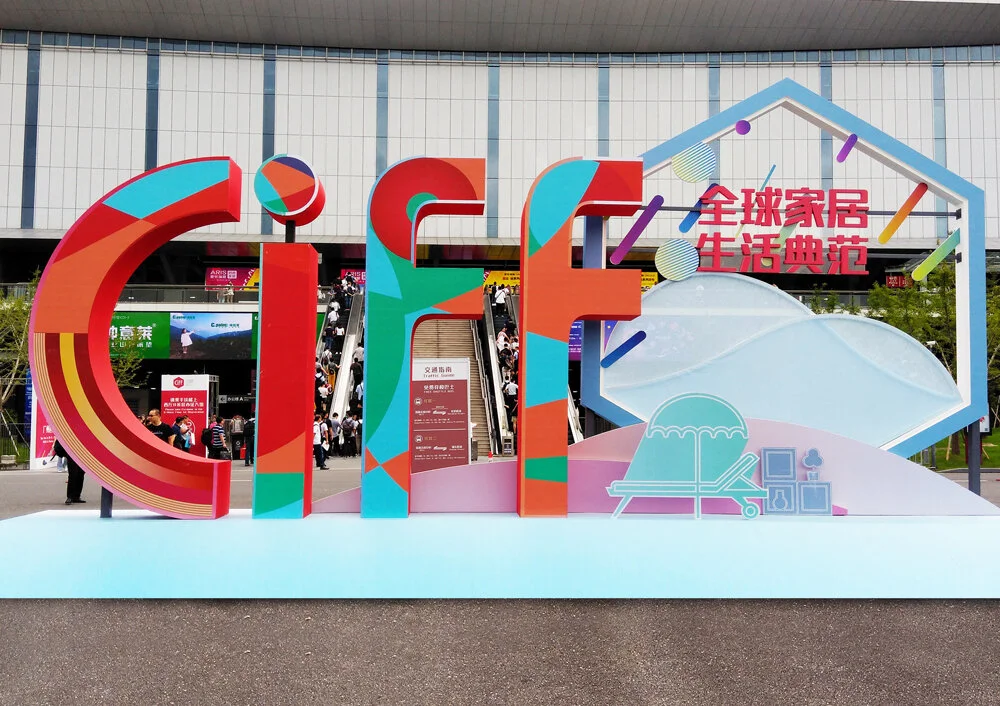
The China International Furniture Fair has grown into something genuinely massive over its 55 sessions. What started in 1998 as a regional trade event now spans two cities, multiple sessions throughout the year, and pulls in visitors from over 200 countries. Walking through 850,000 square meters of exhibition space gives you a sense of just how central this fair has become to global furniture trade.
How CIFF Built Its Position in Global Furniture Trade
CIFF’s reach today comes from deliberate choices about where and when to hold events. The dual-city approach started in September 2015, splitting the calendar between Guangzhou in March and Shanghai in September. Each location serves different purposes. Guangzhou handles the broader scope, covering home furniture, decor, textiles, outdoor pieces, office solutions, and raw materials. Shanghai tends to draw a different buyer mix.
The recent addition of CIFF Tianjin in May 2024 pushed into northern China’s economic zone. This wasn’t random expansion. Northern manufacturers and buyers had been traveling south for years, and a local event made practical sense.
The numbers at Guangzhou alone tell the story. Over 4,900 brands spread across that 850,000 square meter footprint, with more than 380,000 professional visitors showing up annually. The fair positions itself around design trends, global trade, and full supply chain access. That last part matters because buyers can source finished goods and raw materials in the same trip.
What Actually Happens Behind the Scenes
Running an event this size requires coordination that most visitors never see. Consider what happens before doors open. Thousands of exhibitors need booth construction completed on schedule. International participants deal with customs clearance, shipping logistics, and setup timelines that vary by country of origin.
During the fair, managing visitor flow through 850,000 square meters becomes its own challenge. Security, infrastructure, utilities for thousands of booths, emergency response planning. The operational teams handle problems in real time because something always comes up when you have this many people and products in one place.
The Logistics Nobody Talks About
Exhibitors from over 200 countries bring products through different customs regimes with different documentation requirements. Coordinating setup and teardown for thousands of booths requires precise scheduling. One delayed shipment can cascade into problems for neighboring exhibitors. Resource deployment has to account for these variables while keeping the overall timeline intact.
| Operational Area | What It Involves | Why It Matters |
|---|---|---|
| Customs Coordination | Documentation, clearance timing, country-specific requirements | International exhibitors can’t display products stuck in customs |
| Booth Construction | Scheduling, materials, utility connections | 4,900+ brands need functional spaces on opening day |
| Visitor Management | Registration, flow patterns, crowd control | 380,000 visitors need to move efficiently through the space |
| Real-time Support | Problem resolution, emergency response, resource allocation | Issues arise constantly at this scale |
Making the Experience Work for Exhibitors and Buyers
The fair organizes halls around design trends, trade focus, and supply chain segments. This layout helps buyers find relevant exhibitors without wandering through unrelated categories. For exhibitors, placement in the right section puts them in front of appropriate buyers.
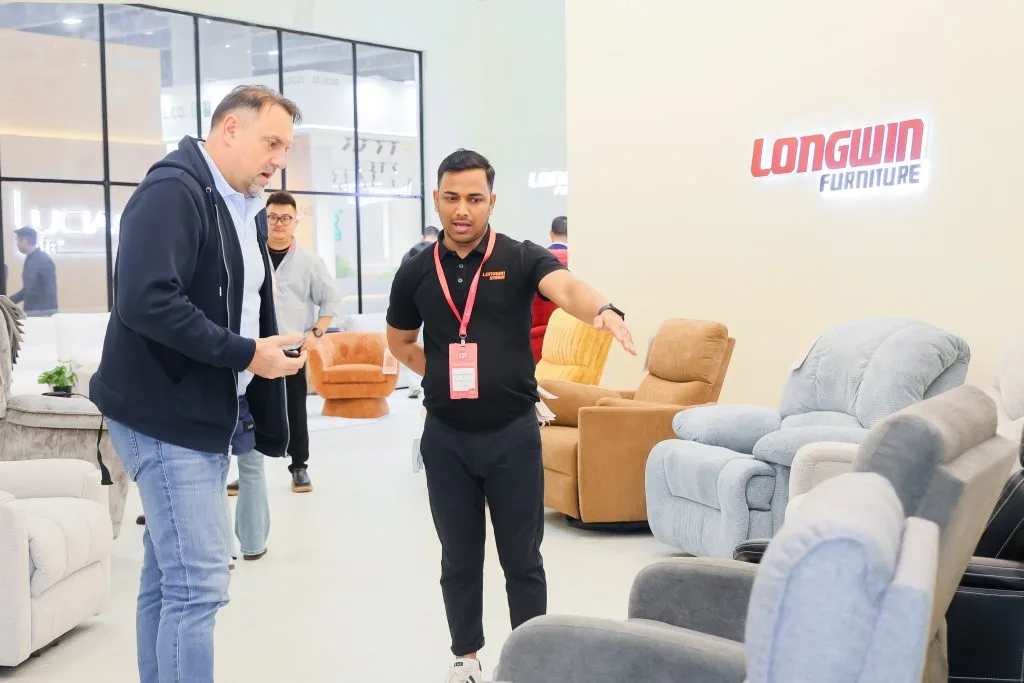
Marketing support varies by exhibitor tier, but the basic proposition remains consistent. Access to a concentrated buyer pool that would take months to reach through individual outreach. For visitors, the value lies in seeing products from multiple suppliers in a compressed timeframe, comparing options, and making connections that lead to orders.
What Success Looks Like Here
Exhibitors measure success differently depending on their goals. Some come for immediate orders. Others focus on brand exposure or finding distribution partners. The fair facilitates both through business matching services and networking events.
Visitors often arrive with sourcing lists and leave with supplier relationships. The efficiency of seeing hundreds of relevant options in a few days beats months of factory visits and sample requests.
| Aspect | For Exhibitors | For Visitors |
|---|---|---|
| Market Access | Concentrated buyer pool from 200+ countries | Suppliers across multiple categories in one location |
| Brand Building | Display opportunities, promotional support | Exposure to emerging brands and established players |
| Networking | Industry connections, partnership opportunities | Direct manufacturer relationships |
| Practical Value | Lead generation, order writing | Efficient sourcing, competitive comparison |
| Support Services | Logistics assistance, marketing tools | Registration, navigation, business matching |
How CIFF Shapes the Broader Market
Events of this scale influence what gets made and what sells. Trends that appear at CIFF often show up in retail channels months later. Manufacturers watch what competitors display. Buyers spot emerging styles and adjust their purchasing accordingly.
The fair’s emphasis on intelligent manufacturing and quality consumption reflects broader industry shifts. Sustainability concerns, automation in production, and changing consumer expectations all surface in what exhibitors choose to showcase.
Longer Term Effects
CIFF has been running long enough that its influence compounds over time. Relationships formed at early sessions have matured into ongoing partnerships. Design directions that gained traction at the fair have shaped product development across the industry. The cumulative effect extends beyond any single session.
Where This Goes Next
The Tianjin expansion signals continued geographic growth. Technology integration keeps evolving, from registration systems to virtual components that extend reach beyond physical attendance. Sustainability in event management has become a consideration, not just in the products displayed but in how the fair itself operates.
The fundamental model remains stable. Bring together manufacturers, suppliers, and buyers at scale. Facilitate connections that drive trade. Adapt to changing market conditions while maintaining the core value proposition that has worked for 55 sessions.
If you are an interior designer looking to navigate the vast offerings, we recommend reading 《Guide for Interior Designers Attending CIFF 2026》 for expert tips and insights.
Join the Global Furniture Community
Discover the unparalleled opportunities at the china international furniture fair. Join industry leaders, explore cutting-edge designs, and forge strategic partnerships that drive global furnishing innovation. Connect with us to shape the future of furniture. For inquiries, please email caoxw@cfte.com.
Frequently Asked Questions
What are the key challenges in organizing a large-scale international furniture fair like CIFF?
Running CIFF involves coordinating venue operations across multiple cities, managing thousands of international exhibitors with varying customs requirements, and handling visitor flow for hundreds of thousands of professionals. Booth construction schedules, security infrastructure, and real-time problem resolution all require significant planning. When exhibitors come from over 200 countries, documentation and shipping logistics alone become a major operational focus.
How does CIFF ensure a successful exhibitor and visitor experience at its events?
The fair organizes exhibition halls by category and function, making navigation practical for buyers with specific sourcing needs. Exhibitors receive marketing support and placement in relevant sections. Registration processes aim for efficiency, and business matching services help connect buyers with appropriate suppliers. The overall layout reflects the fair’s focus on design trends, trade facilitation, and supply chain access.
What is the long-term impact of CIFF on the global furniture market and industry development?
CIFF influences design trends, manufacturing approaches, and trade relationships across the furniture industry. Connections made at the fair often develop into ongoing business partnerships. The event’s scale means trends that gain traction there tend to spread through global markets. Over 55 sessions, this cumulative effect has shaped how the industry operates and what products reach consumers worldwide.