


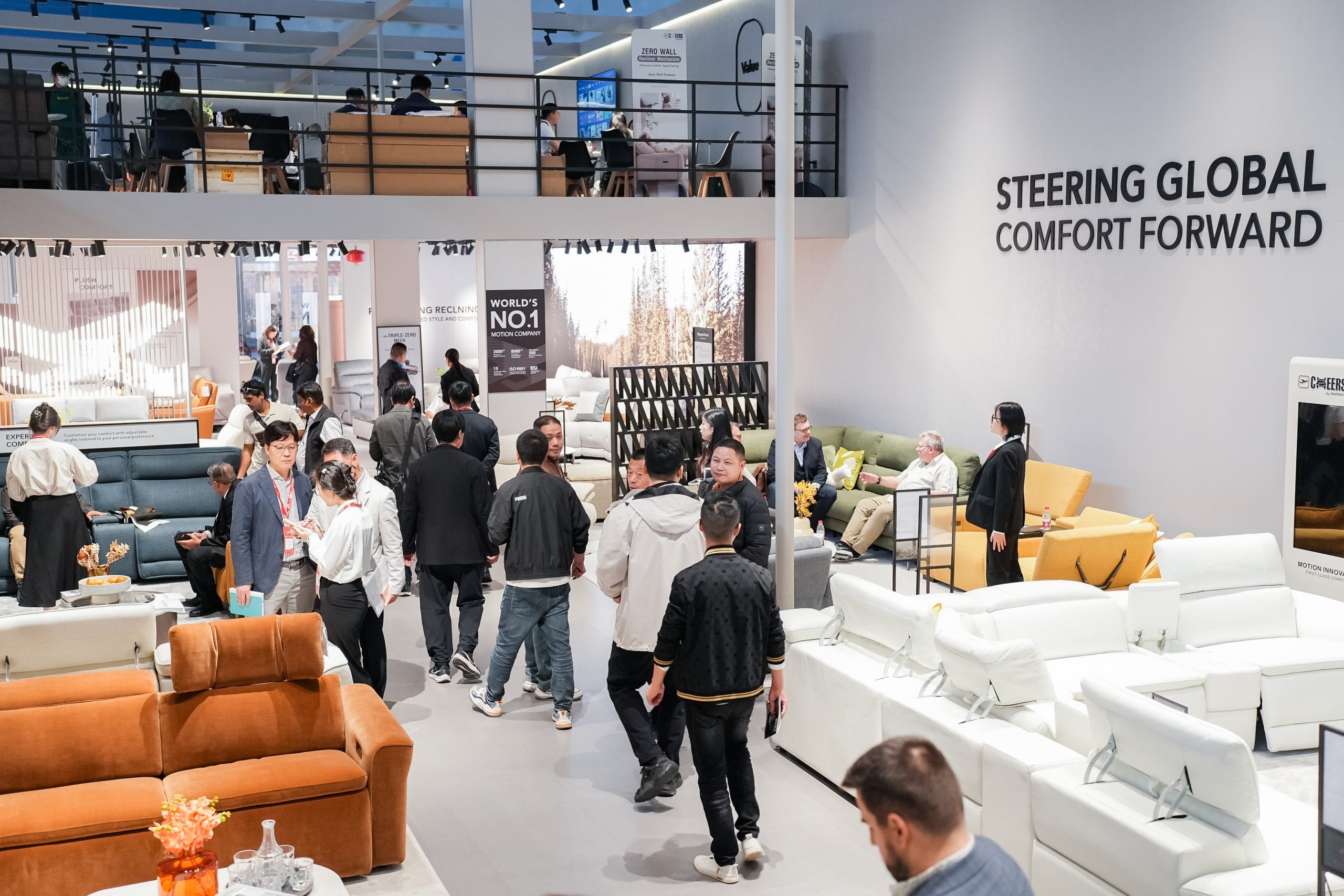
In 2026, global furniture trade relies increasingly on online meeting communications.
A well-prepared one-hour video conference does more than just save tens of thousands of dollars in unnecessary travel expenses; it simplifies complex procurement projects and drastically improves efficiency.
Over the years, I participated in an online meeting with an international seller that perfectly illustrates this. A large European enterprise aimed to source 2,000 modular office chairs requiring EN 1021-1/2 compliance. The original design consisted of 15 independent components sourced from 4 different regional suppliers. Flying directly to China for offline coordination would have incurred estimated costs exceeding $8,000 for airfare, accommodation, translation, and inter-factory transportation.

Instead, the buyer wisely opted for online meetings first. Using CIFF’s Click2Connect online business matching system, they pre-screened three manufacturers equipped with MES (Manufacturing Execution Systems) and scheduled one-hour in-depth technical meetings. Both parties engaged in profound technical dialogue, achieving parametric alignment for all 15 modular components. Ultimately, the collaboration moved forward successfully, and the buyer established a stable new supplier channel.
What should a buyer prepare before a one-on-one online furniture supplier meeting? To ensure the meeting is efficient and enables you to see through “sales talk,” buyers must prepare the following four core elements:
1. The Essential Core Requirement List
Before attending the meeting, do not just bring a vague intention; prepare specific, parametric requirements.
- Product Spec Sheet: Include dimensions, material requirements, and surface treatments to help the supplier quickly confirm their production capabilities. This also allows the supplier to estimate an approximate price range.
- Compliance Checklist: List the certifications required for your target market (e.g., BIFMA, EN 1335, CAL 117). Suppliers who cannot meet these standards can be excluded immediately.
- Estimated Order Quantity (EOQ): Provide estimates for both trial orders and mass production. If your volume is significant, use this as a primary bargaining chip to secure better pricing.
2. The Must-Ask Technical Questionnaire
- Supply Chain Control: “Who is your fabric supplier? If they experience a delivery delay, what is your backup plan?”
- Quality Pain Points: “Regarding common quality issues for this product—such as [Specific Issue]—what are your specific QC interception points on the production line?”
- Digital Transparency: “Do you use an MES system? Can you provide me with a weekly progress report generated by the system during order execution?”
3. Environment and Tool Preparation
- Request Live-Stream Access: Inform the manufacturer in advance that you wish to see a live broadcast of the workshop during the meeting.
- Screen Sharing Materials: Have your design sketches or competitor reference images ready to discuss modification ideas in real-time.
- Translation/Recording Tools: If their English proficiency is limited, prepare real-time translation software or arrange for a colleague familiar with furniture terminology to be present.
4. Supplier Pre-Audit Scorecard
Prepare a minimalist scoring sheet to record observations in real-time. This allows for an objective side-by-side comparison of multiple suppliers via the Click2Connect platform after the meeting:
| Evaluation Dimension | Excellent (Green) | Red Flags | On-site Notes |
| Communication Response | Answers technical details within 10 seconds. | Frequently checks phone or asks a supervisor for answers. | |
| Transparency | Brave enough to show an untidy but real production line. | Refuses live connection; only sends polished photos. | |
| Design Understanding | Can point out unreasonable structures in your design. | Nods blindly and says “no problem” to everything. | |
| Certification Support | Can show original certificates via screen share on the spot. | Claims they will “email it later” but never does. |