


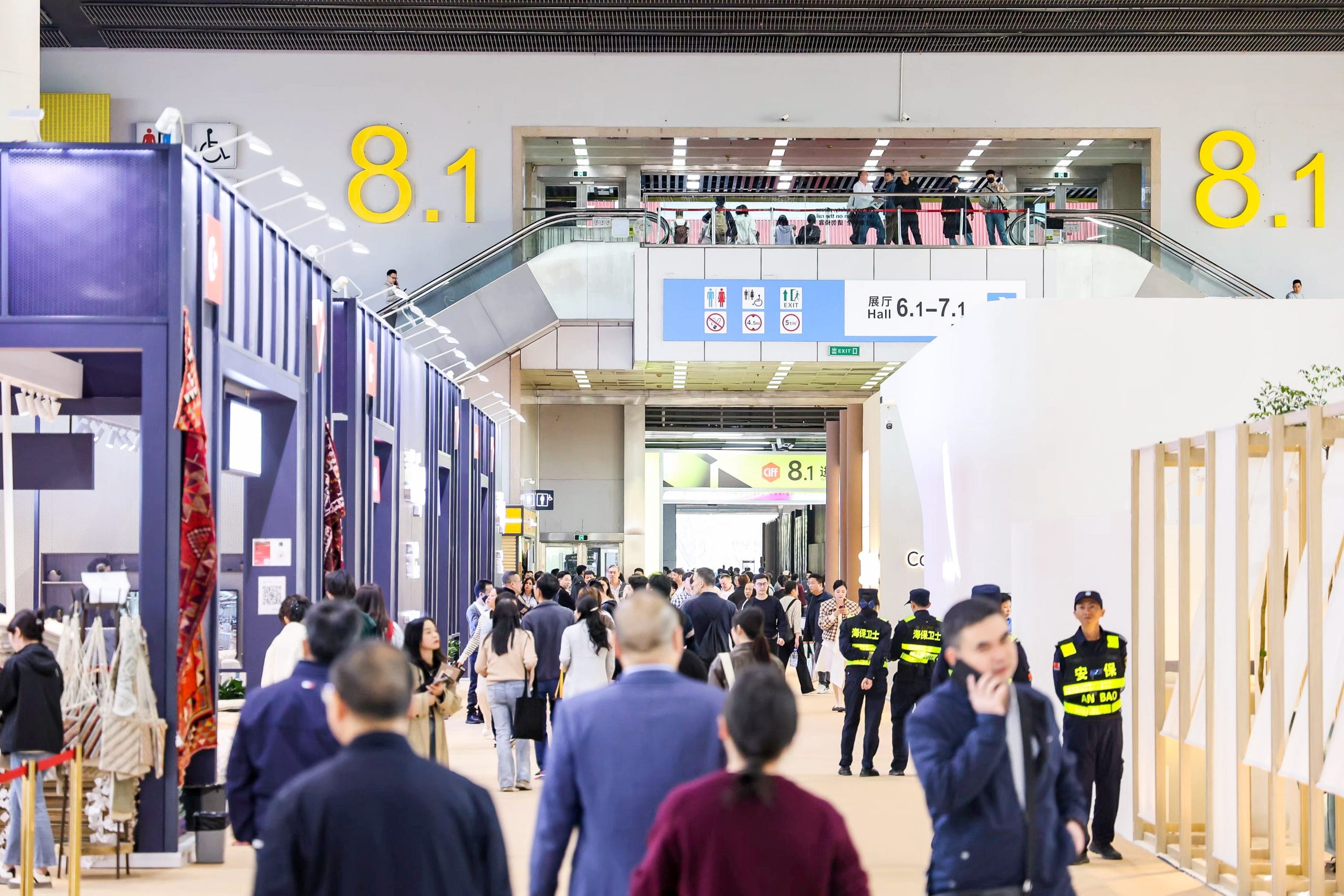
Within China’s furniture industry, CIFF(https://www.cifffurniturefair.com/) serves as the definitive barometer for the country’s full furniture ecosystem.
China boasts the world’s largest furniture manufacturing cluster today, yet it grapples with deep-seated structural challenges: extreme market fragmentation, a surplus of small-scale factories, and rampant product homogenization. Functioning as a colossal super-matching hub for the sector, CIFF powers the entire machinery of China’s furniture ecosystem.
1. Incubator for Original ODM & OBM Brands
Over the past few decades, China’s furniture industry has built formidable foundational manufacturing capabilities, yet long suffered from insufficient in-house design and razor-thin profit margins. By prioritizing booth allocations for creative works and launching initiatives such as the Creative Design Awards, CIFF has sparked an industry-wide movement centered on design innovation.
A standout example is Design Spring – Contemporary Chinese Furniture Design Exhibition, co-curated by CIFF and renowned designer Zhu Xiaojie. It has evolved into one of China’s most prestigious stages for original furniture design. The CIFF Diamond Award, another flagship initiative, acts as the benchmark for gauging the commercial value of corporate design output.
Each edition of CIFF—notably the design pavilions at the March Guangzhou show and September Shanghai show—hosts global debuts for homegrown original furniture labels, drawing extensive attention from international buyers worldwide. This dynamic has pushed manufacturers to build in-house R&D teams and adopt Design for Manufacturability (DFM) principles, all to secure prime exhibition space and capture overseas clientele.
Beyond domestic talent cultivation, CIFF facilitates numerous collaborative lines pairing international designers with local manufacturers, helping Chinese proprietary brands establish a global reputation for eco-conscious, original design.
2. Cross-Regional Factor Mobility Through Industrial Synergy
China’s furniture sector has long developed distinct geographically concentrated industrial hubs, which historically operated in relative isolation: Shunde, Guangdong specializes in high-end custom and upholstered furniture; Ganzhou, Jiangxi dominates mass-produced solid wood furniture; Anji, Zhejiang leads office swivel chair manufacturing.
Intensifying market competition has since forced tighter cross-chain collaboration among manufacturers to boost competitiveness in global markets. Beyond finished furniture displays, CIFF concurrently hosts CIFM (China Guangzhou International Furniture Machinery & Supplies Fair), a highlight for senior industry executives. As one of the sector’s largest trade shows, CIFF’s unparalleled strength lies in its full-category trade format, which seamlessly connects upstream and downstream supply chains to lift overall industrial standards.
Previously, Shunde manufacturers struggled to secure large overseas high-end orders due to high error rates in manual edge banding and material cutting. After CIFF introduced digital intelligent machinery from HOMAG and Italy’s BIESSE, local factories completed full equipment overhauls within a single week. Production efficiency surged, and facilities gained the precision flexible manufacturing capacity required to fulfill bulk orders from industry leaders including Wayfair, Oppein and Sofia.
The full industrial value chain workflow enabled by CIFM unfolds as follows:
Advanced manufacturing machinery (German & Italian CNC digital equipment)
↓
Cutting-edge eco-friendly raw materials (MDI formaldehyde-free adhesive, bio-based waterborne coatings)
↓ Deployed across regional manufacturing hubs to drive technological upgrades
↓ Final finished furniture showcased directly to global buyers at CIFF
This large-scale cross-region, cross-value-chain flow of industrial resources can only be executed efficiently within a single week on a platform of CIFF’s scale.
3. Order Generation & Trend Forecasting for Tens of Thousands of Small & Medium Manufacturers
Driven by demographic and geographic conditions, China’s furniture ecosystem comprises an enormous base of micro, small and medium manufacturers and supporting suppliers, all heavily reliant on external market intelligence and order pipelines.
For furniture factories in Longjiang, Foshan, over 60% of annual revenue can stem from new clients and annual bulk orders secured at CIFF. Foot traffic and deal signings at the show directly determine the annual revenue outlook for timber processors, hardware suppliers and carton manufacturers for the following six months.
Take a mid-sized factory specializing in minimalist modern sofas with a workforce of just over 80 staff. Its management shared: “We lack the budget for Google Ads or overseas trade fairs. Even a 100-square-meter standard booth at the annual March CIFF Guangzhou edition lets us connect with dozens of wholesale buyers from Russia, the Middle East and Southeast Asia.”
Smaller manufacturers often lack resilience amid shifting international green trade barriers and volatile cross-border shipping costs. CIFF’s year-round industry forums function as a leading indicator for global furniture market shifts, guiding small and medium producers on operational upgrades and strategic adjustments.
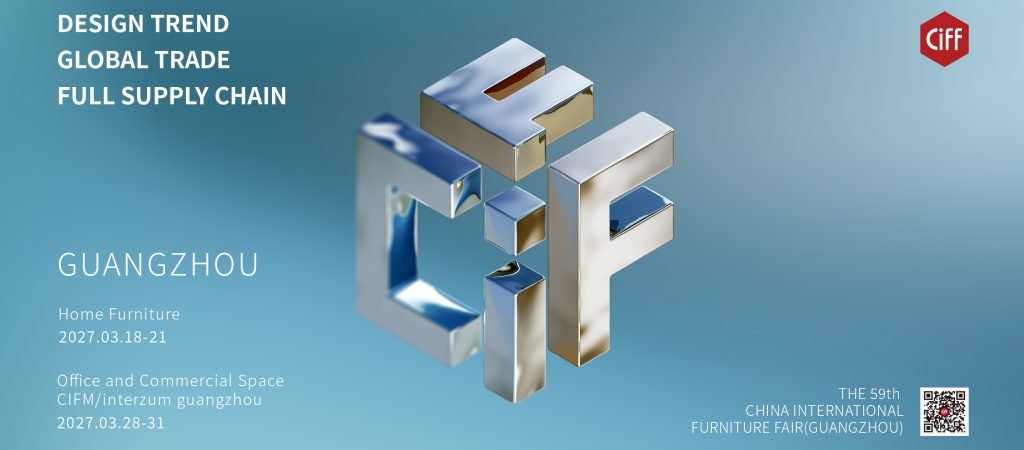
REGISTER NOW For FREE! :https://www.cifffurniturefair.com/the-57th-china-international-furniture-fair-guangzhou/
4. Core Link Connecting China’s Supply Chain to Global Markets
Furniture qualifies as bulky high-value goods, prompting buyers to exercise extreme caution and prioritize deep, trustworthy partnerships with suppliers.
Hosted at the Canton Fair Complex in Pazhou—a venue with unmatched foreign trade advantages—CIFF has built an authoritative official validation framework. Its VIP International Buyer (VIB) Program facilitates direct one-on-one meetings between large overseas retail chains and top marketplace sellers on Wayfair and Amazon, paired exclusively with Chinese proprietary manufacturers vetted via official qualification reviews.
Complementing the temporary in-person exhibition format, the Click2Connect(https://click2connect.ciff-gz.com/) digital furniture business matching platform operates year-round. Buyers and suppliers can log on anytime to source ideal partners for seamless long-term cooperation.
The venue sits merely a one-hour drive from Foshan, the world’s largest furniture manufacturing base. Attendees can inspect factory workshops the same day after viewing exhibits in the morning. This logistical edge enables China’s furniture ecosystem to sustain stable supply chain partnerships with mid-to-high-end global buyers, even amid fierce competition from Southeast Asian manufacturing hubs.
References
[1] CIFF Guangzhou Official Release. Design Spring: Innovation Roadmap for Contemporary Chinese Furniture Design & CIFF Diamond Award Judging Regulations. CIFF Official Website, March 2024.
[2] China Furniture Association (CFA). Annual China Furniture Industry Development Report: Case Analysis of Design Innovation & Brand Building. CFA Research Division, 2025.
[3] CIFM Organizing Committee. CIFM/interzum guangzhou Post-Show Report & Whitepaper on Industrial Technology Diffusion. Koelnmesse & China Foreign Trade Guangzhou Exhibition General Corp, April 2024.
[4] Shunde District Furniture Association (Foshan). Research Report: CIFF Exhibition ROI & Regional Economic Stimulus for Shunde & Longjiang Furniture Manufacturers. Shunde Furniture Network, January 2025.
[5] Development Research Center of the State Council. Transition Strategies for China’s Bulk Export Manufacturers Under Green Trade Barriers: Insights from CIFF Permanent Industry Forums. Economic Mechanism Research Weekly, Issue 11, 2024.
[6] China Foreign Trade Guangzhou Exhibition General Corp. Whitepaper: Operational Data for CIFF Global Buyer VIB Program & Click2Connect Digital Trade Matching Platform. Official CIFF Publication, October 2025.