


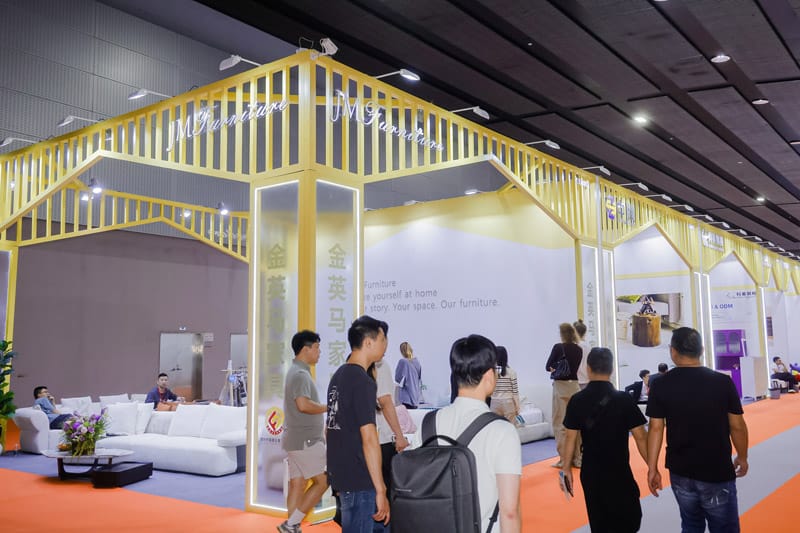
China holds formidable competitive advantages in furniture manufacturing thanks to its labour resources, land economics and industrial clusters, drawing numerous European brand partners.
Take Nordic design as an example. It may appear deceptively simple — little more than clean lines and solid timber. Yet minimalism’s core trait is the absence of ornamentation to distract the eye. Any flaw, rough joint or tiny miscalculation in proportion gets magnified, which can sink the entire production run. That is why translating Scandinavian minimalist designs from concept to finished goods depends heavily on Chinese manufacturing.
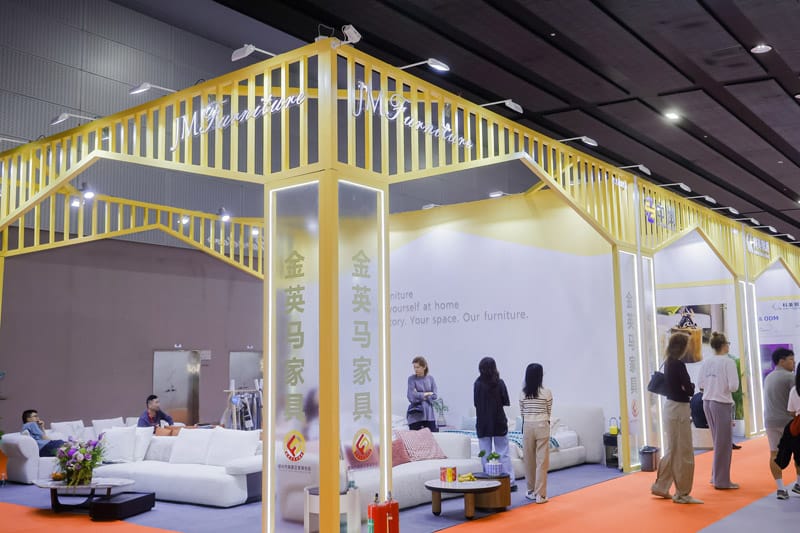
Historically, Nordic minimalist furniture carried steep shipping and handcraft costs, placing it among luxury goods accessible only to a select few. Made in China has played a pivotal role here, keeping costs in check while meeting European environmental standards. Its key strengths are outlined below:
Exceptional Craft Precision
Modern Chinese manufacturing in 2026, especially within furniture production, boasts highly mature technology. The elite supply chains showcased annually at CIFF Guangzhou illustrate this well. Chinese manufacturers deploy multi-axis CNC machines and precision metalwork to faithfully reproduce — and in some cases outperform — hallmarks of Nordic design: concealed mortise-and-tenon joinery, smoothly radiused edges and ultra-thin cantilever structures.
QM Furniture, founded in 1993, first made its name in China with original Nordic designs. Scandinavian minimalism leans heavily on bentwood techniques, a capability once monopolised by native Nordic brands such as Stokke. To break this technical barrier, QM installed large-scale high-frequency hot-pressing equipment and 5-axis CNC machining centres at its production bases in Beijing and elsewhere.
QM recruited leading international Nordic designers including Hans Sandgren Jakobsen, turning their hand-drawn schematics for sweeping bentwood profiles into mass-produced pieces. Leveraging precision tooling and high-frequency hot forming from Chinese manufacturing, the brand achieves the seamless, one-piece armrests and backrests characteristic of Nordic design.
Cluster Effect of Integrated Supply Chains
China hosts the world’s most complete furniture industrial clusters, with globally recognised hubs in Shunde (Guangdong), the Jiangsu-Zhejiang region and beyond. Manufacturers source premium imported white oak and North American black walnut efficiently and cost-effectively, or develop eco-compliant micro-cement and water-based paints. This full-value-chain synergy enables rapid large-scale production of high-quality Scandinavian-style furniture.
One smart furniture manufacturer based in Shunde has long served as an OEM for top-tier European minimalist brands. When European designers commissioned a Nordic solid-wood dining table defined by an ultra-thin cantilevered top and concealed metal sliding rails, the Shunde cluster allowed the firm to coordinate partners within a 3-kilometre radius: timber suppliers, precision hardware factories custom-building hidden steel beam structures, and coating specialists developing ultra-matte water-based finishes with a micro-cement texture.