


In the furniture trade of 2026, manufacturers in Italy and Poland remain immersed in the tradition of craftsmanship. While this preserves heritage, it inevitably leads to extended lead times, which no longer seem to meet the needs of brands requiring agile supply chains.
As representatives of high efficiency, exhibitors at CIFF 2026 have achieved peak operational performance, offering the world’s fastest delivery cycles for customized furniture. Furthermore, to address market demands for smaller order volumes, some Chinese manufacturers have leveraged flexible production to reduce customization costs to unprecedented levels.
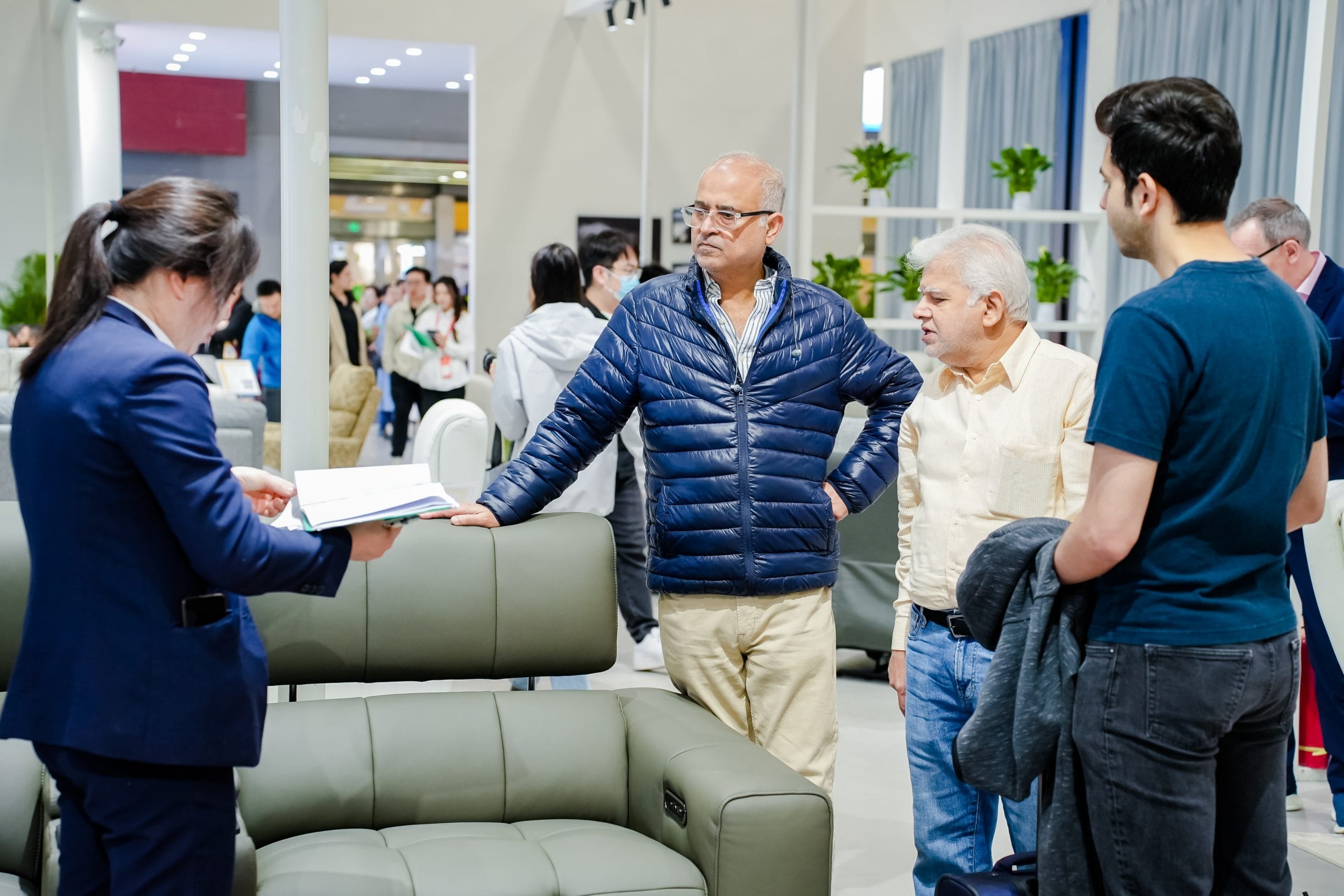
How do global buyers use the CIFF platform to conduct cross-comparisons between Chinese and European furniture products? The following is a deep dive into how global buyers perform horizontal comparisons across the dimension of supply chain responsiveness:
1. Shortening Furniture Delivery Cycles: From 90 Days to 21 Days
Supply chain responsiveness in the European furniture sector tends to be linear and rigid; while they possess stable supply channels, they lack flexibility. In contrast, Chinese manufacturers at CIFF demonstrate “networked synergy,” creating a complementary effect with European industry chains and forming two distinct poles of the global furniture industry.
- The European Status Quo: Even leading Polish furniture factories typically face cycles of 8–12 weeks for non-standard orders, covering everything from raw material procurement and production scheduling to international logistics.
- CIFF Performance: Leveraging the dense industrial clusters in Foshan and Dongguan, furniture exhibitors can implement concurrent engineering. A buyer only needs to confirm modification requests at the booth, and the factory can complete physical prototyping in as little as 48 hours. To secure orders and major clients, these manufacturers utilize digital production scheduling systems to compress delivery cycles to within 3–4 weeks, reaching the pinnacle of efficiency.
2. The Depth of Flexible Production: Mass Customization
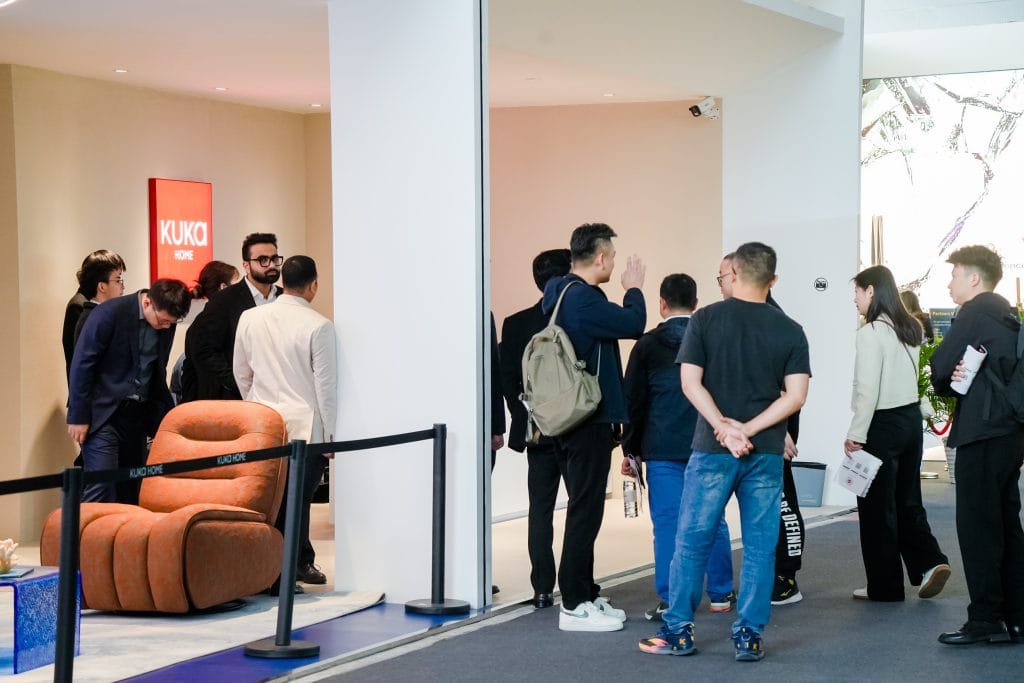
The furniture consumer market in 2026 is diversifying rapidly. Consequently, buyers often have procurement needs across various categories simultaneously. They look to CIFF for “super factories” capable of processing diverse orders on a single production line.
Today, leading exhibitors at CIFF have popularized MES (Manufacturing Execution Systems). This means that if one product on the line is a minimalist sofa destined for Germany, the very next item could be a modular seat for the U.S. market using CAL 117 flame-retardant standards. These projects do not conflict; they are processed through parallel production.
Furthermore, European factories often impose high Minimum Order Quantities (MOQs) for customization, otherwise unit prices skyrocket. In contrast, through intelligent CNC cutting and automated sorting robots, Chinese manufacturers can maintain highly competitive marginal costs even for flexible small orders of just 50–100 pieces. This is a capability that European manufacturers find difficult to replicate.
3. “Instant Switching” of Compliance: One-Stop Adaptation to Global Standards
For multinational retailers, the responsiveness of a furniture supply chain is also tied to its sensitivity to laws and regulations.
For instance, European products often strictly adhere to a single standard, such as EN standards. At CIFF, however, buyers can request manufacturers to perform “hardware swaps” for different markets—such as rapidly integrating BIFMA-certified hardware for the North American market.
During periods of trade volatility, the Chinese supply chain demonstrates immense resilience. Manufacturers can quickly provide supporting solutions with different Certificates of Origin within the same exhibition hall, ensuring that a buyer’s global distribution chain remains uninterrupted.
4. CIFF Exhibitors are Gradually Enhancing Digital Transparency
CIFF exhibitors in 2026 are exporting a form of “transparent trust.” After signing a contract, many buyers can use supplier-provided apps to monitor the real-time progress of their orders in factories located in Foshan or Luoyang.
Compared to the European model, which relies on emails and phone calls, this IoT-based real-time feedback significantly alleviates the inventory anxiety of buyers.
Supply Chain Comparison: Flexibility Levels Between China and Europe
| Dimension | European Traditional Factories (Linear Supply Chain) | CIFF-Supported Enterprises (Agile Supply Chain) |
| Prototyping Response | 2–4 weeks (Relies on external suppliers) | 3–7 days (Internal & localized support) |
| Production Switching Cost | Extremely high (Requires downtime for line adjustment) | Extremely low (Program-controlled, supports mixed-line production) |
| Supply Chain Radius | Cross-regional coordination, long logistics chain | 1-hour industrial circle, “on-demand” raw materials |
| Mass Customization Capability | Suitable for luxury customization with high premiums | Suitable for flexible customization in mid-to-high-end and mass markets |
Conclusion
While the European furniture market remains a benchmark for high-end aesthetic home furnishings, CIFF Guangzhou has evolved from a mere “foreign trade window” into a strategic center for the global furniture industry. For professional global buyers seeking lower costs, more comprehensive categories, and frontier technology, CIFF is an irreplaceable destination.