


Modern furniture design is largely built around warm neutrals and earth tones — think oat, clay brown and olive green. Pair these foundations with bold accent hues or sculptural statement furniture, and you can infuse personality into otherwise subdued interiors. Often, a single thoughtful design choice is enough to make a home feel both cosy and artistic.
When expansive background surfaces feel flat, carefully calibrated sharp contrasts create striking artistic tension. For example, suppose your living room walls, ceiling and flooring are all finished in low-value pale taupe micro-cement. While cohesive, this palette can read lifeless. Place a plush velvet accent chair upholstered in saturated International Klein Blue in the space, and the whole room instantly comes alive.
When guests step inside, their eyes are immediately drawn to that rich, enigmatic shade of Klein blue. The grounded earth-toned base collides with this avant-garde modern-art colour, yielding a sophisticated aesthetic that feels contrasting yet surprisingly harmonious.
REGISTER NOW For FREE! :https://www.cifffurniturefair.com/the-57th-china-international-furniture-fair-guangzhou/
So how exactly do statement pieces reshape interior spaces within furniture design? Below we break down how to deploy accent colours through standout furniture.
I. How to Use Bold Accent Colours Wisely (Three Golden Rules)
To avoid visual clutter and keep focal points crisp, follow the classic 60-30-10 colour rule: 60% Base Tone: Large surfaces including walls, main flooring and ceilings use broad swathes of warm neutrals. 30% Secondary Tone: Large upholstered sofas, wooden cabinetry and window treatments rely on earth tones or tonal transitions within the same colour family. 10% Accent Tone: Individual furniture pieces and artful soft furnishings feature high-chroma, high-value eye-catching shades such as sapphire blue, caramel amber orange, lime green and sunset red.
Stick to the principle of low-saturation base + bright high-value highlights: Accent colours should not exist as isolated blocks. If you select a maroon accent chair, echo that hue with coordinating cushions, artwork or floral arrangements to tie the palette together.
II. Statement Furniture Picks for Accenting Your Space
1. Sculptural Accent / Lounge Chairs
Opt for chairs defined by fluid lines and organic curved silhouettes. Recommended colours include cobalt blue, amber yellow and deep burgundy.
Space-transforming effect: Position a sleek, boldly coloured lounge chair in a living-room nook with a floor lamp, and the corner instantly becomes an artistic retreat for reading and quiet reflection.
2. Mixed-Material or Vibrant Coffee & Side Tables
Look for side tables finished in high-gloss lacquered timber or translucent coloured glass. Suitable colourways: forest green, terracotta, or bold black metal framing.
Space-transforming effect: Set in front of large light rugs or fabric sofas, contrasting materials — the transparency of glass or the sheen of lacquer — reflect light. This cuts through the heaviness that earth palettes can carry and lends refined modern flair to the room.
3. Expressive Dining Chairs
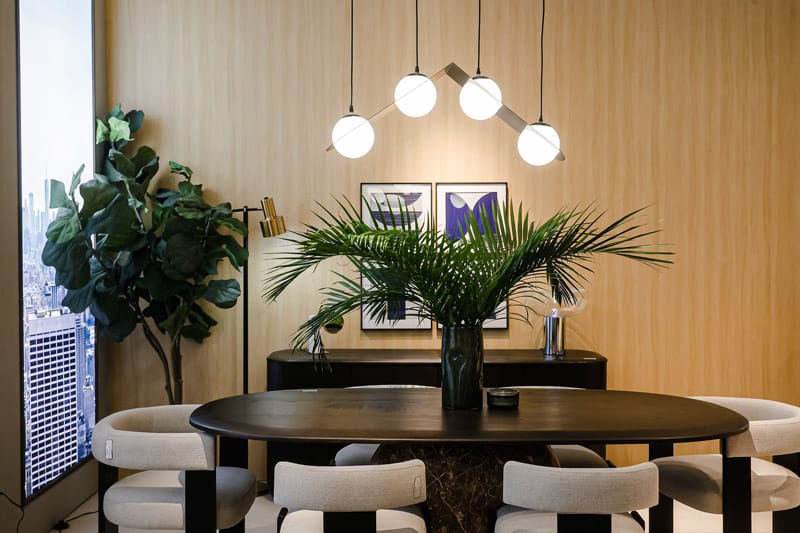
Design trick: Pair a simple solid timber or micro-cement dining table with four to six avant-garde dining chairs in complementary hues, such as enveloping shell chairs or wireframe art chairs.
Colour strategy: Use colour blocking. For instance, intersperse one mustard or brick-red chair among deep green dining seating. This makes the dining zone the lively centrepiece of an open-plan living area.
4. Modular or Curved Colourful Ottomans / Poufs
Benefits: Compact and easy to reposition, these are the most cost-effective yet impactful accent tools.
Colour picks: Go for energising tones like lime green, berry pink or bright caramel orange. They double as extra seating and footrests, acting like colourful candy dots scattered across the floor to inject lighthearted, casual character into calm interiors.