



Within today’s residential design landscape, a style balancing rational structure with luxurious sensuality is making a sweeping comeback: the modern revival of Art Deco.
A globally influential design movement of the 20th century, Art Deco, after decades of quiet, is returning to premier home interiors and international fairs under the banner of Neo Deco.
I. What is Art Deco?
Art Deco emerged in the late 1910s and reached its zenith at the 1925 Paris Exposition Internationale des Arts Décoratifs et Industriels Modernes. It encapsulates the mechanisation of the early Industrial Age, blending the era’s optimism with mystical iconography from Ancient Egyptian and Mayan civilisations.
Art Deco is defined by rigid geometric discipline: symmetrical layouts, ziggurat silhouettes (a nod to New York skyscrapers), radiating sunburst motifs, streamlined contours and the iconic chevron pattern. It also heavily employs ebony, brass, stainless steel, marble, mirrored glass and velvet to build dramatic visual impact.
II. The Allure of Art Deco in Modern Furniture
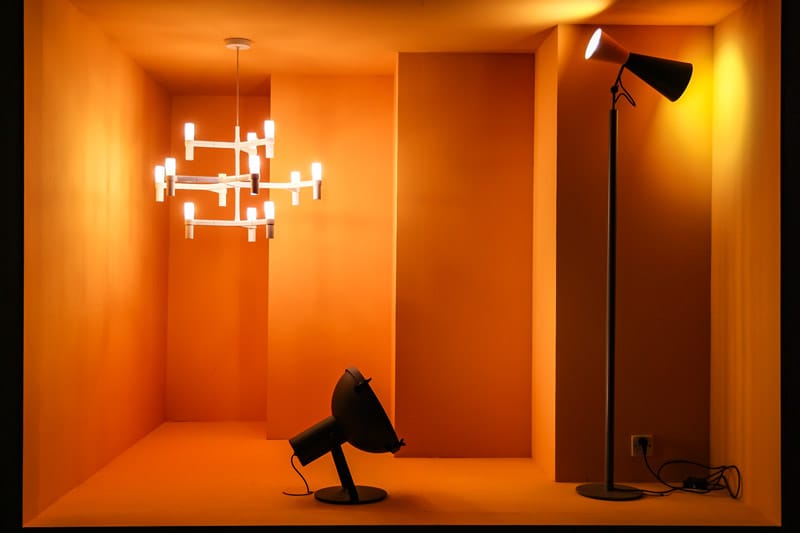
Contemporary Neo Deco pieces are conceived as standalone sculptures, far from mundane, and inherently tied to domestic artistry. Modern craftsmanship creates compelling combinations of matte lacquer, brushed brass, reconstituted veneer and translucent glass or marble. As light plays across these materials, it generates rich layers of light and shadow, evoking a sense of flowing time.
Unlike minimalism, Art Deco embraces individuality and opulence. Yet it avoids the excessive ornamentation of traditional classicism, reining in grandeur through disciplined geometric lines within a modern framework. In recent years, Salone del Mobile Milano, Wallpaper* Design Awards and other platforms have featured distinctive modern Neo Deco works by leading designers.
A much-discussed highlight from Salone del Mobile is the Borgonuovo game table by Armani Casa, a masterclass in understated Neo Deco luxury. Crafted from precious ebony, its tabletop is inlaid with taupe leather and conceals a rotating chess and draughts board.
The Delfi Madia cabinet by Promemoria delivers a 3D optical effect through layered wood veneers and repeating grain patterns. Recessed vertical grooves at its centre, paired with perimeter concealed lighting, read like a quiet, refined poem.
There is also Tacchini’s reissue of the “Pigreco” chair, designed by Tobia Scarpa. Soft upholstery wraps a lacquered wooden frame, and the interplay between polished finish and geometric negative space creates a captivating rhythmic quality.