



Traditionally, furniture making has been viewed as an age-old craft—a labor-intensive domain where veteran artisans handle everything from timber cutting and boring to assembly and finishing, relying entirely on human experience and physical stamina.
As an increasing number of furniture factories integrate industrial and collaborative robots (cobots) into their assembly lines, what profound impacts will this shift bring to B2B volume buyers, hotel group procurement managers, and brand owners?
I. The Automation Transformation Unfolding in Furniture Manufacturing
While CNC machining and laser cutting have achieved high levels of digitization, downstream assembly operations have historically remained heavily dependent on manual labor. This reliance stems from the complex spatial alignment required, the flexible deformation inherent in upholstery materials, and the intricate fastening of various hardware components.
In recent years, breakthroughs in multi-axis robotic arms, machine vision, and flexible tooling have completely altered this landscape. Modern assembly robots not only replace human workers in handling heavy panels, but also execute complex tasks with pinpoint accuracy, including automated glue dispensing, invisible mortise-and-tenon assembly, multi-angle screw driving, and the stretching and securing of fabric covers.
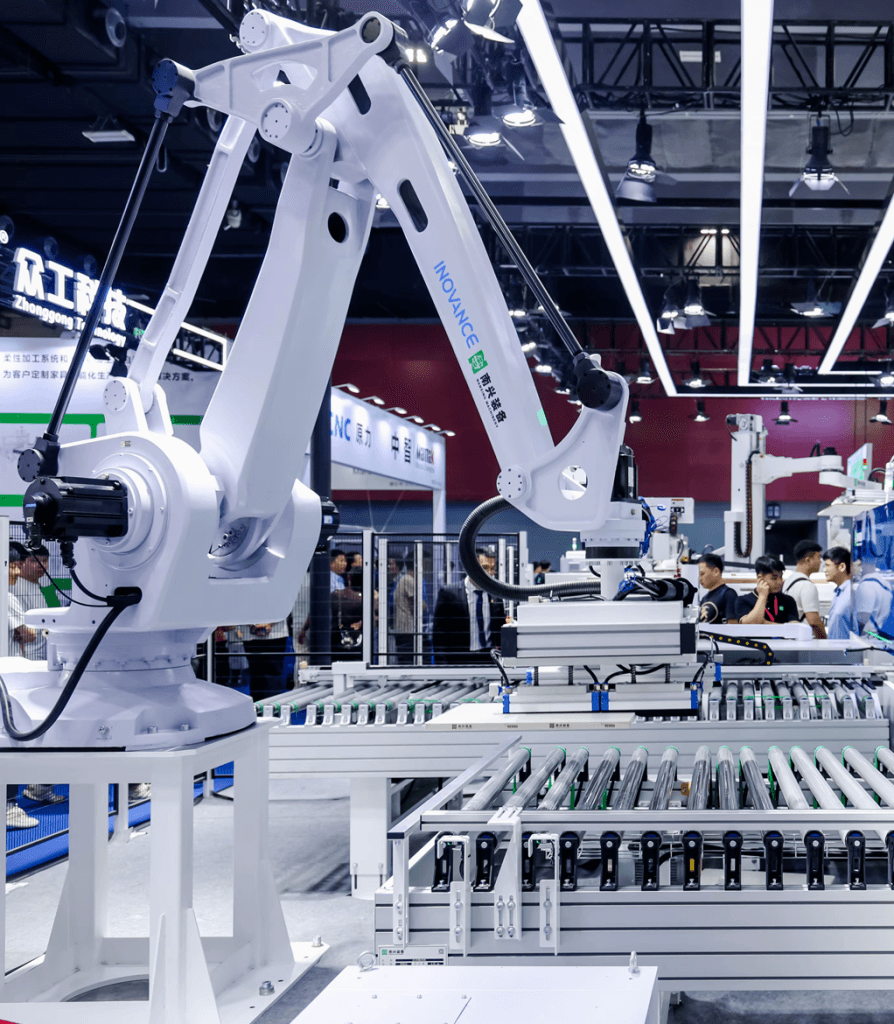
Powered by machine vision and programmable control systems, these robots can instantly identify varying product batches and specifications, enabling seamless multi-model mixed production on a single line without wasting production capacity.
II. Core Advantages Delivered by Robotic Assembly Lines
The precision of robotic assembly remains unmatched. Whether maintaining exact glue application thickness, boring depth, or screw-driving torque, robots operate with absolute accuracy. Conversely, manual assembly is prone to human error, with fatigue occasionally leading to missing components, incorrect installations, or loose screws.
Furthermore, robots support round-the-clock, heavy-duty operation, offering exceptional capacity surge during major promotional events or large-scale hotel project deliveries. When handling heavy marble countertops, solid wood slabs, or delicate glass components, smooth robotic handling drastically reduces handling damage and transit losses.
III. What This Means for Furniture Buyers
For B2B buyers and brand owners placing volume orders with manufacturing facilities, the robotic transformation of production lines translates directly into a formidable competitive edge.
In traditional contract manufacturing, a volume buyer’s biggest headache is discrepancies between sample pieces and bulk shipments. Because manual assembly cannot match robotic precision and varies widely depending on worker proficiency, inconsistencies inevitably arise. Robotic assembly lines utilize standardized programming to ensure that the 1,000th piece matches the initial sample with absolute fidelity, guaranteeing uncompromised product quality for brand owners.
Moreover, high-end real estate procurement, luxury hotel renovations, and designer brands demand multi-category, low-volume, customized products featuring varied dimensions. Historically, such orders drove factories to despair because frequent line changeovers incurred prohibitive setup costs and severe scheduling delays.
World-class contract manufacturers—such as those supplying global office furniture giants like Herman Miller—have widely integrated multi-axis assembly robots and smart tightening systems. This digital control ensures that every fastening torque, angle, and adhesive volume is accurate to the millimeter and milligram.
Because robotic assembly lines operate nearly 24/7, the overall production cycle is drastically compressed, sharply accelerating delivery timelines. For instance, automated sorting and robotic integration implemented by industry leaders like Ashley Furniture effectively optimize assembly and end-of-line packaging, enabling robotic arms to execute precise stacking and assembly assistance at a rate of hundreds of boxes per hour, driving massive surges in facility output.
For commercial real estate developments facing stringent deadlines, this predictability enhances supply chain certainty, eliminating exposure to breach-of-contract liabilities. Similarly, European supply chain upgrades utilizing KUKA industrial robots and autonomous mobile robot (AGV/AMR) fleets have automated whole-factory material handling, sorting, and intelligent palletizing, compressing factory lead times by over 30%.
Although the capital expenditure required for automated production lines is substantial, long-term operational savings are significant. Robots substantially cut defect rates, manual rework, and quality-related after-sales expenses. Consequently, this model is exceptionally well-suited for well-capitalized tier-one manufacturers and serves as a vital pathway for mid-sized factories seeking industrial upgrading.
Conclusion
The integration of robotic assembly lines within furniture manufacturing extends far beyond simple workplace labor substitution; it marks the starting point of a profound supply chain evolution. For volume buyers and brand owners, partnering with upstream suppliers who actively embrace robotic assembly and intelligent manufacturing secures the highest quality standards and strongest delivery capabilities for the markets of tomorrow.