


As a major furniture producer and exporter, China has a highly diversified system of furniture suppliers, among which manufacturers and trading companies are the two main entities.
However, there are significant differences between the two in terms of operation mode, service capabilities, pricing, and other aspects. Combining authoritative industry data, this article compares the differences, advantages, and disadvantages of the two to provide reference for relevant practitioners.
I. Overall Pattern of China’s Furniture Suppliers
According to industry data released by the China National Furniture Association (CNFA), as of the end of 2024, there were 7,459 above-scale enterprises in China’s furniture industry, achieving an operating income of 677.15 billion yuan and a total profit of 37.24 billion yuan. In terms of exports, the cumulative export volume of China’s furniture industry reached 67.81 billion US dollars in 2025.
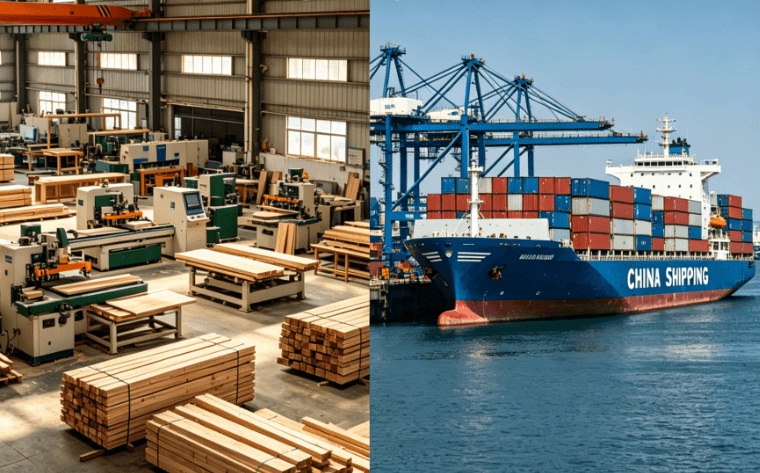
In this industrial pattern, factories focus on product R&D and manufacturing; trading companies connect factories with purchasers and focus on channel connection and logistics coordination services. Data support for these contents can be found in documents such as the China Furniture Industry Economic Operation Brief and the China Furniture Industry Import and Export Report.
II. Core Differences Between Factories and Trading Companies
(I) Operation Modes
1. Furniture Factories: Generally engage in independent production, with independent production workshops, production equipment, and technical teams. They are responsible for a one-stop complete production capacity from raw material procurement, design and R&D, production and processing to quality inspection. According to the 2025 China Complete Set Furniture Industry White Paper by Huaxinren Consulting, the raw material cost of furniture factories accounts for more than 80% of the total cost of customized furniture, and cost and production capacity management at the production end are their core competitiveness.
2. Furniture Trading Companies: Do not have independent production capacity, but are good at integrating factory resources to provide purchasers with one-stop services such as product selection, order connection, logistics and customs declaration, and after-sales coordination. Industry data shows that the profits of trading companies mainly come from product price differences and service commissions.
(II) Data Comparison of Key Dimensions
| Comparison Dimension | Furniture Factories | Furniture Trading Companies | Authoritative Data/Reference Source |
|---|---|---|---|
| Price Advantage | Factory price, no intermediate price increase, 15%-30% lower than trading companies | 15%-30% price increase, relatively high price, but cost can be reduced through bulk purchasing | DIKAPABED Industry Research Data |
| MOQ (Minimum Order Quantity) | Relatively high, regular single product MOQ ≥ 50 pieces, customized MOQ ≥ 100 pieces | Relatively low, can integrate resources of multiple factories, MOQ ≥ 10 pieces, supporting mixed batch purchasing | EVERPRETTY Furniture Industry Report |
| Customization Capability | Extremely strong, can adjust material, size and design according to customer needs, customization cycle 15-30 days | Relatively weak, can only make minor adjustments based on existing products of cooperative factories, low customization freedom | Huaxinren Consulting, 2025 China Complete Set Furniture Industry White Paper |
| Delivery Cycle | Relatively long, regular orders 20-45 days, customized orders 30-60 days | Relatively short, relying on existing inventory and cooperative factory resources, delivery cycle 10-25 days | DIKAPABED Industry Research Data |
| Quality Control | Independently control the entire production process, quality inspection pass rate ≥ 98%, can provide quality inspection reports | Rely on cooperative factories for quality inspection, no independent quality inspection capability, quality inspection pass rate about 92%-95% | China National Furniture Association Industry Standard Requirements |
| Service Scope | Focus on production, only provide basic delivery services, no follow-up supporting services such as logistics and customs declaration | One-stop services, including selection, order follow-up, logistics, customs declaration, and after-sales coordination | EVERPRETTY Furniture Industry Report |
(III) Comparison of Advantages and Disadvantages
| Supplier Type | Core Advantages | Disadvantages | Relevant Data and Supplementary Explanation |
|---|---|---|---|
| Furniture Factories | Low price, flexible customization, controllable quality; suitable for purchasers with large-volume purchases and customization needs | High MOQ requirements, single service; high requirements on purchasers’ order scale and supply chain capabilities; most do not have direct export qualifications and need to rely on third-party customs declaration | According to CNFA’s 2025 China Furniture Industry Import and Export Report: More than 60% of China’s exported furniture in 2025 came directly from factories, of which customized furniture accounted for 35% of exports |
| Furniture Trading Companies | Low MOQ, comprehensive services, fast delivery; can integrate resources of multiple factories to provide diversified choices; suitable for purchasers with small-volume purchases, new purchasers, and overseas small and medium-sized purchasers | Relatively high price, weak customization capability; quality control relies on cooperative factories, with certain quality risks; lack of independent quality inspection capability | Industry research shows: About 28% of purchasers reported that they had experienced inconsistencies between quality and samples when purchasing through trading companies |
III. How to Choose the Right Supplier?
1. Prioritize Choosing Factories:
Purchasers with large-volume purchases (order quantity ≥ 50 pieces), customization needs, cost control requirements, and independent supply chain and customs declaration capabilities. For example, large overseas home furnishing chain brands and large domestic distributors usually cooperate directly with furniture factories.
2. Prioritize Choosing Trading Companies:
Purchasers with small-volume purchases (order quantity < 50 pieces), no customization needs, new purchasers, overseas small and medium-sized purchasers, and those in need of logistics, customs declaration, and after-sales services.
V. Conclusion
There is no distinction between superior and inferior between factories and trading companies among China’s furniture suppliers; the key lies in suitability. Factories focus on price and customization advantages, while trading companies focus on flexibility and convenience advantages. For purchasers, it is most appropriate to choose based on their own purchase order quantity, customization needs, budget, and service needs.
Authoritative Reference Sources
[1] China National Furniture Association. 2025 China Furniture Industry Import and Export Report[R]. March 18, 2026. China Industrial Economic Information Network.
[2] China National Furniture Association. Introduction to China National Furniture Association[EB/OL]. Official Website of China National Furniture Association.
[3] Huaxinren Consulting. 2025 China Complete Set Furniture Industry White Paper[R]. December 2025.
[4] China National Furniture Association. 2024 China Furniture Industry Economic Operation Brief[R]. January 2025.
[5] DIKAPABED. Factory vs. Trading Company: How to Tell in 5 Minutes[R]. 2024.
[6] EVERPRETTY Furniture. What is the Difference Between a Manufacturer and a Trading Company[R]. December 27, 2024.