


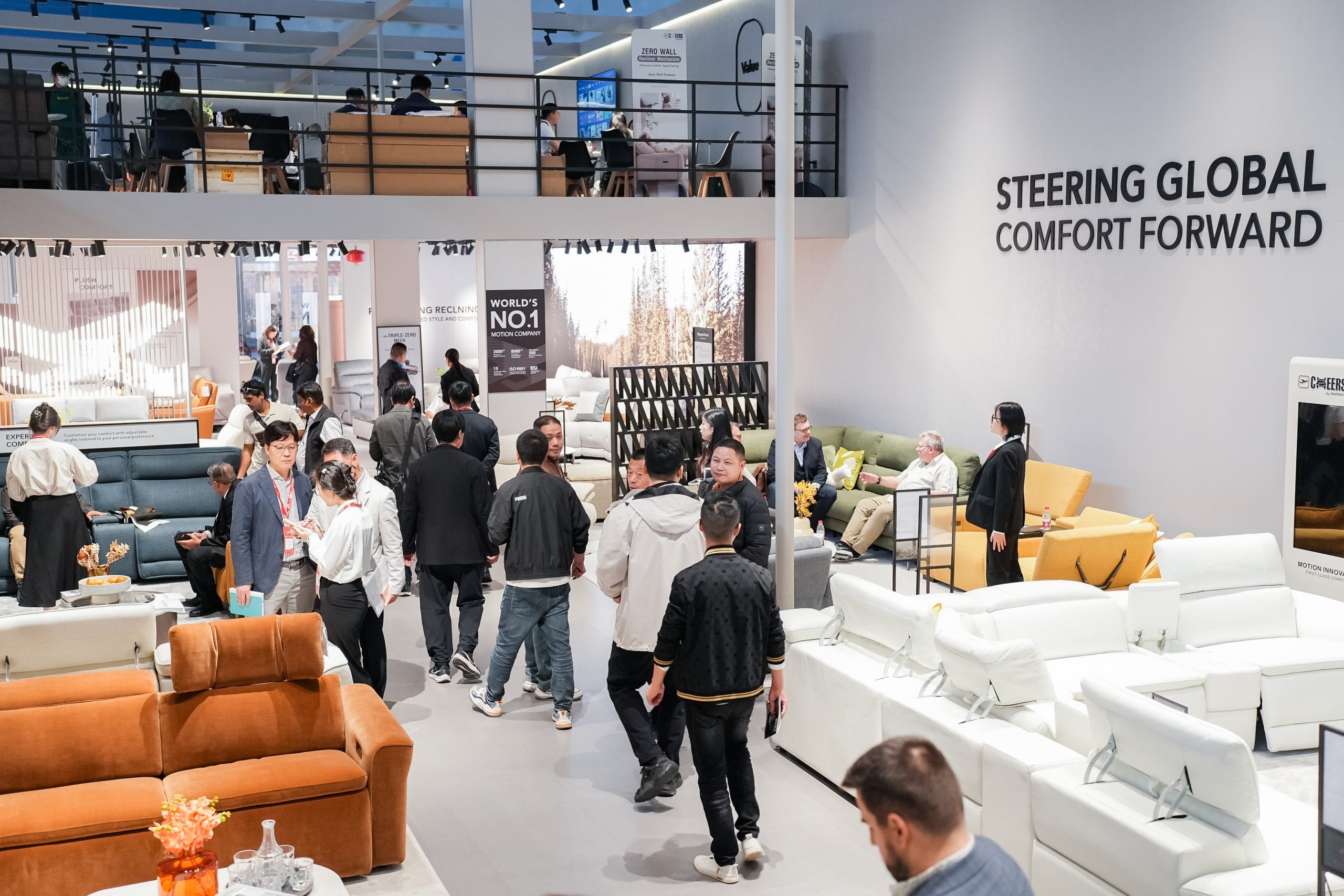
During my ten years deep in Chinese furniture manufacturing, I have been stationed on production lines in Foshan and Shunde and have handled numerous quality disputes involving international procurement.
I have witnessed losses incurred by buyers who placed blind orders based solely on promotional images online, but I have also seen many success stories through web-based platforms. Online furniture sourcing from China: which scenarios work, and which are destined to fail?
I. Scenarios That Usually Work
Standardized Industrial Goods and Component Procurement:
- Scenario: Sourcing hardware, standardized table legs, office chair gas lifts, fabrics, panels, etc.
- Reason: These products follow rigorous international/industry standards. Confirmation via technical drawings and standard samples is straightforward, communication costs are low, and quality risks are controllable.
Production for Established “Repeat Customers”:
- Scenario: Placing re-orders for conventional products with factories where a long-term cooperative relationship exists.
- Reason: The chain of trust is already established; at this stage, online furniture procurement is merely a procedural step.
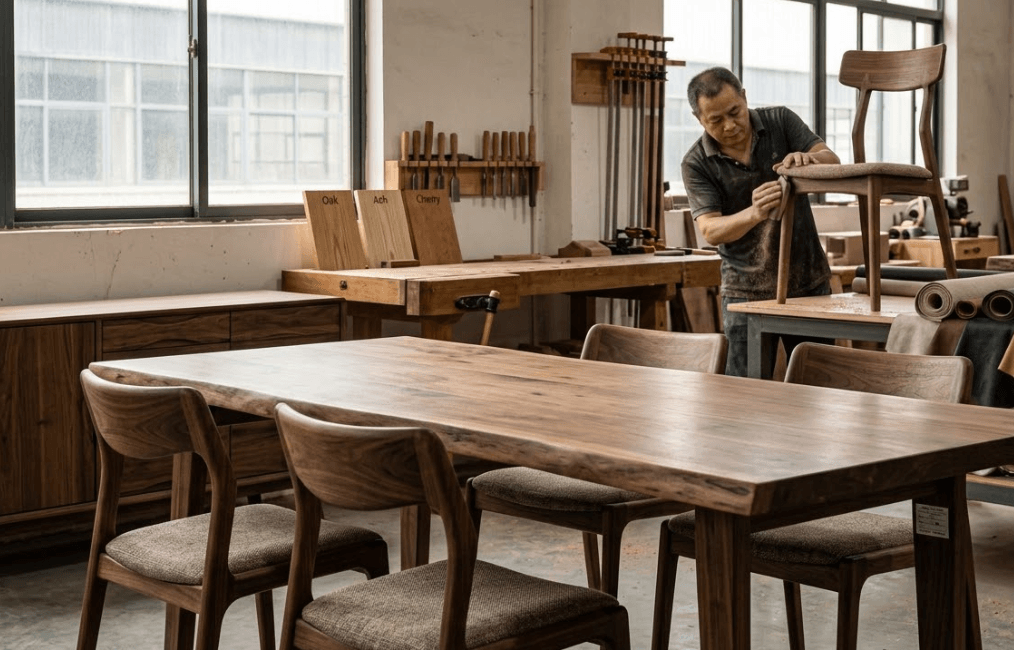
Bulk, Low-Unit-Price Mass Procurement:
- Scenario: Sourcing hundreds or thousands of uniform chairs or tables for large projects, such as hotel chains or office space renovations.
- Reason: The scale of the order is sufficient to cover third-party inspection fees, and suppliers strictly adhere to contract specifications to maintain major client relationships.
The Preliminary Screening Phase:
- Scenario: Using Google search, Click2Connect, and other B2B platforms for price benchmarking and identifying potential factory shortlists.
- Reason: You can query company information and compare furniture products online in advance. Use these platforms to discover high-potential factories before moving to offline engagement.
II. Scenarios Destined to Fail
The Risk of Ordering Directly Without Seeing Physical Samples:
- Scenario: Placing orders for high-value furniture based only on high-definition renderings without ever seeing a physical sample.
- Reason: The feel and smell of leather cannot be digitized. Any product can be embellished through exquisite design, but the texture of the hide, color variations, and the resilience of the foam require personal inspection. You must avoid the extreme costs of logistics and returns that occur when the delivered goods do not match the description.
Online Customization of Complex Designs:
- Scenario: Describing complex, non-standard customization requirements to a factory via online chat tools (WhatsApp, Email) while attempting to skip the drawing review.
- Reason: Cooperation in the furniture industry requires extensive communication. Some factories may not understand your design intent through text alone. Without deep engineering alignment, the final product often misses the mark by a mile.
Click the link below to pre-register now and participate in CIFF 2026 immediately. CIFF 2026
The Impulse to Buy Cheap While Ignoring Hidden Costs:
- Scenario: Being lured by extremely low prices online while ignoring issues such as customs clearance, fire/environmental certifications, and potential damages during long-distance sea freight.
- Reason: When prices are significantly below the industry average, it likely means the supplier has cut costs on raw materials or environmental treatments.
Over-Reliance on Online Reviews:
- Scenario: Assuming that good online ratings equate to reliable quality.
- Reason: In the furniture export field, many reviews can be fabricated. Online procurement without third-party inspection is extremely dangerous.
III. Professional Advice for You
As a professional with over 10 years of experience in the furniture trade, I suggest a procurement model that combines internet efficiency with offline verification.
- First, use online research and platform data analysis to filter for a list of potential partner factories, rather than just the “lowest price” factories.
- Next, you must require the factory to mail physical color swatches and material samples, or even pay for a prototype.
- Then, be explicit about your procurement requirements; do not expect the factory to read between the lines. Transmit specifications, tolerances, and quality inspection standards in the form of a formal contract.
- Finally, if you have reliable partners in China, commission them to perform on-site inspections to minimize risk.